This is one of the most persistent food myths. Despite being easily debunked, it just refuses to go away. Well, read on and you’ll know better!
Fructose and Table Sugar
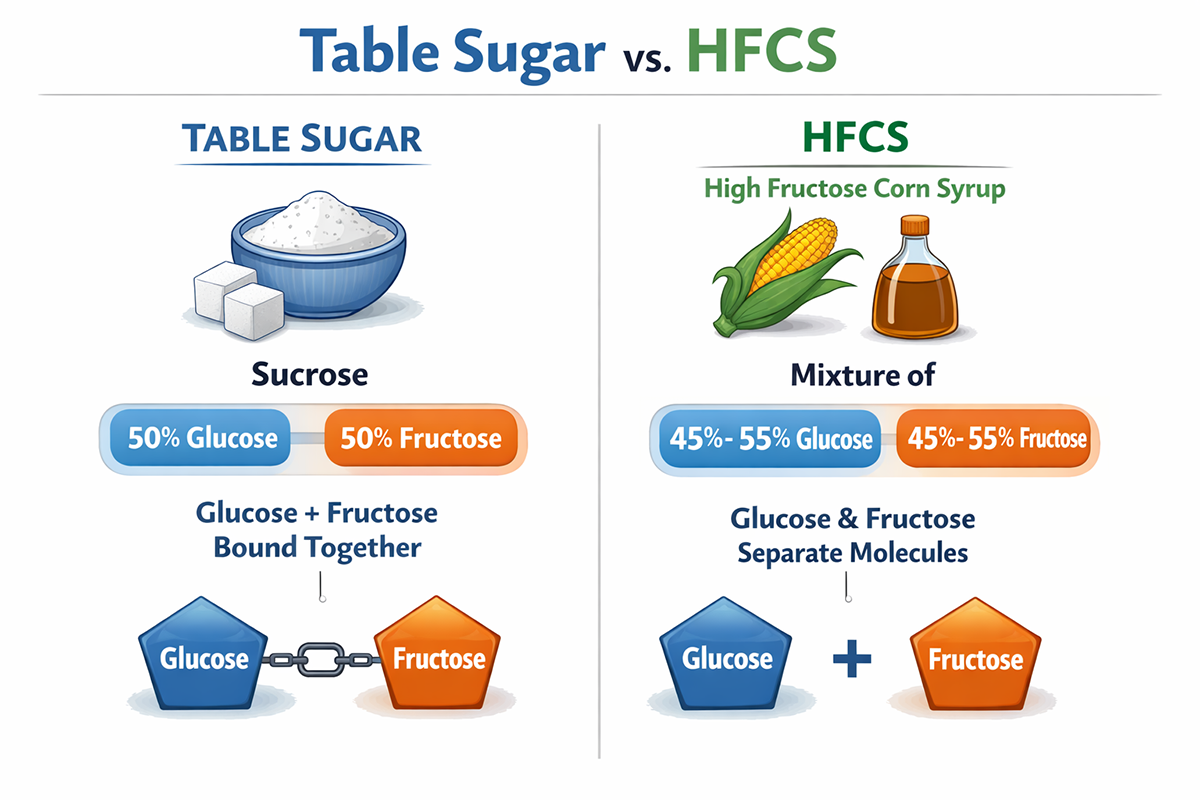
Table sugar (aka sucrose or cane/beet sugar) is made of equal parts of two simpler sugars, glucose and fructose. When digested, it breaks down and your body absorbs the glucose and fructose. HFCS also contains glucose and fructose but in a slightly different proportion, most commonly 55% fructose and 45% glucose (hence, high fructose). So, ingesting HFCS instead of table sugar gives you 5% more fructose and 5% less glucose. To listen to some people, this is the end of civilization as we know it! Yet, many studies have been conducted comparing HFCS to table sugar, and they have failed to turn up any meaningful differences in their effects on the body, including insulin, triglycerides, blood glucose, liver function, or appetite-related hormones.
What About Excessive Fructose?
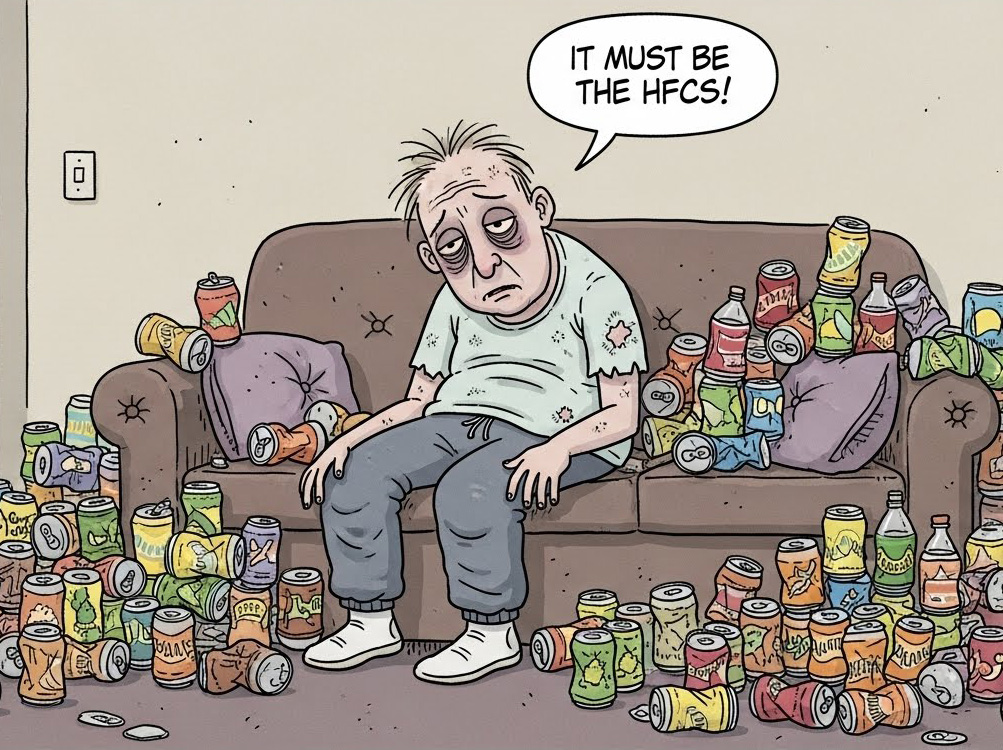
It is true that excessive fructose can have negative health effects. The key word here is excessive and any real-world diet would never come near having enough fructose to be harmful. If you get too much fructose from table sugar or from HFCS it is still too much. And HFCS is widely used in soft drinks, snacks, and processed foods that are often consumed in large quantities.
There is little doubt that consuming less of these foods would be a good idea health-wise, but not because of they contain HFCS rather than cane sugar. It is how much sugar you eat, not the kind of sugar, that matters for your health.
Honey is High Fructose
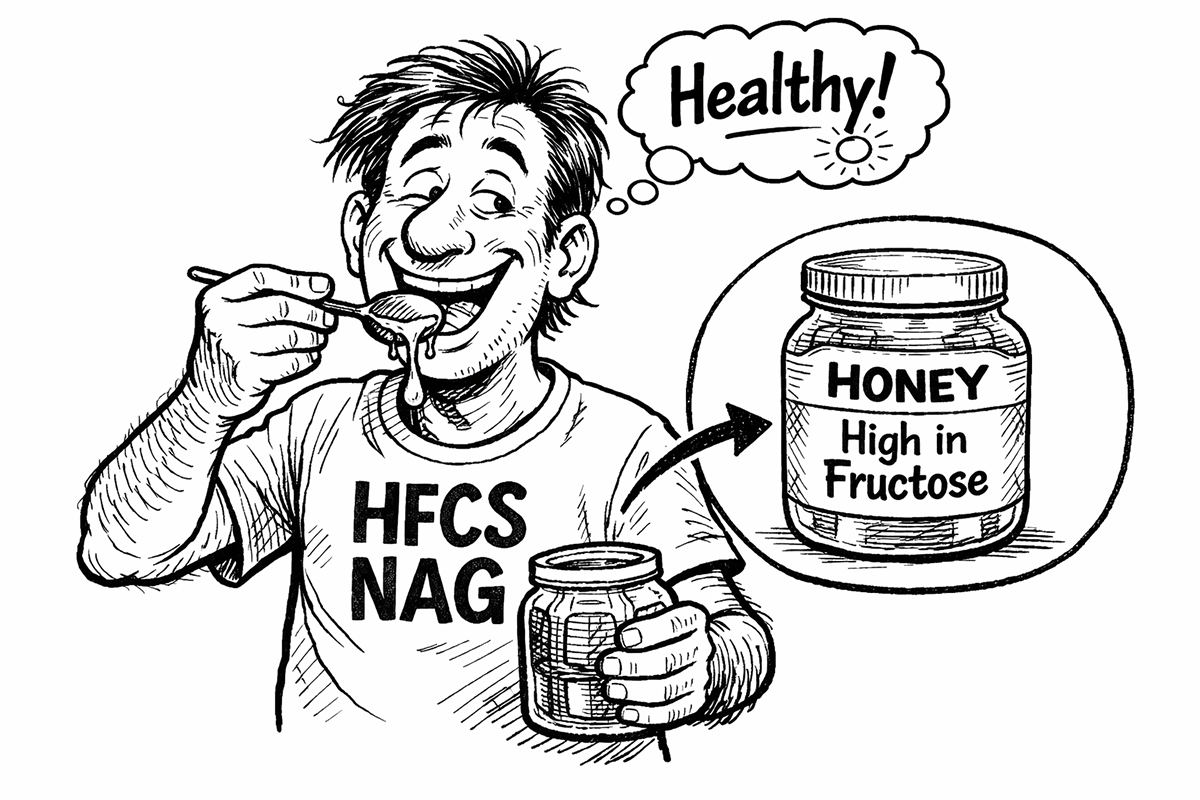
The HFCS doomsayers somehow neglect to mention honey, beloved of health food fans (and me!). Honey contains more fructose, relative to glucose, than the worst HFCS - 38% fructose and 31% glucose, approximately (the remainder is mostly water). I don't recall hearing about any anti-honey campaigns, do you? Likewise, agave and molasses are high in fructose.
Why Use HFCS at All?
So, just why is HFCS used so widely? Because it is cheap and easy for manufacturers to work with in making processed foods and drinks. Corn subsidies and sugar tariffs/quotas have also contributed to the cost difference between HFCS and cane sugar, especially in the U.S. These factors have resulted in cane sugar being about three times as expensive as HFCS.