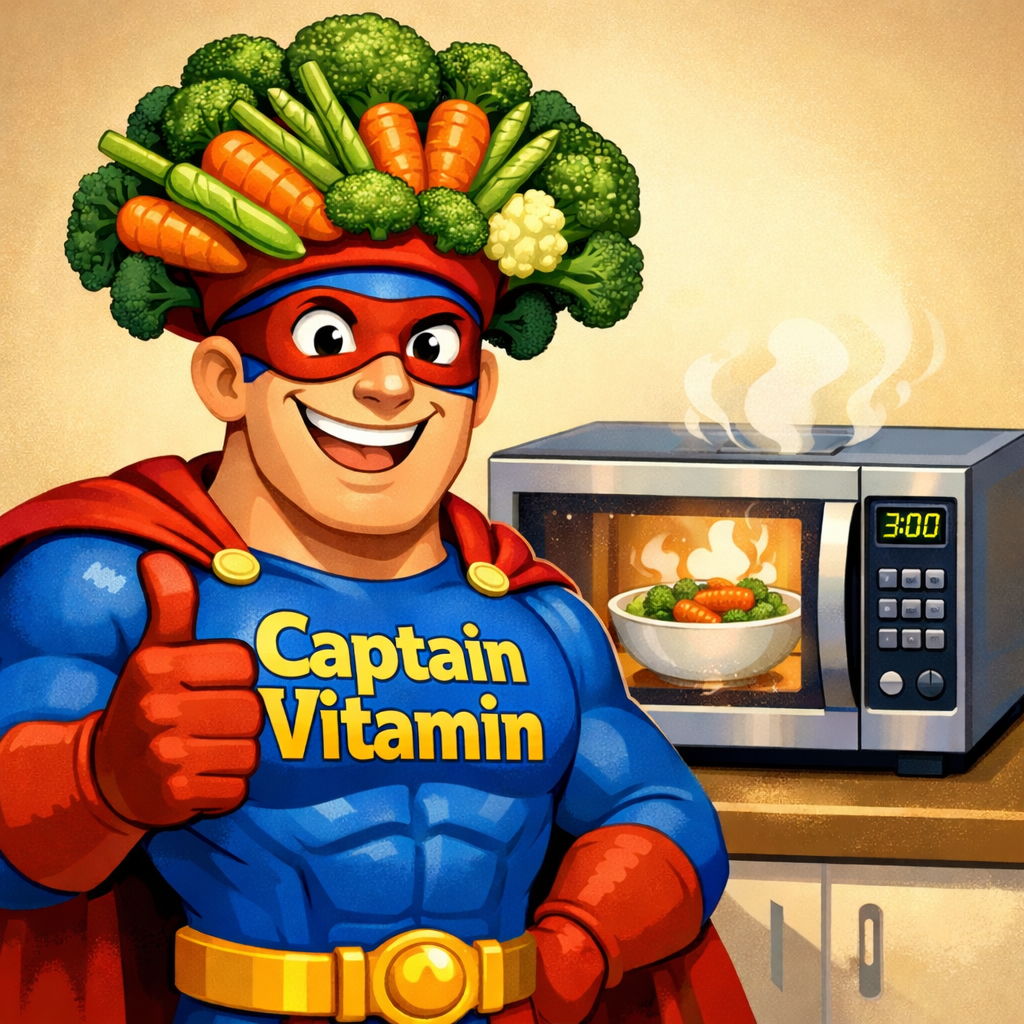
This myth is not only false, it is double false! Microwave cooking does not destroy nutrients and in fact preserves more nutrients than some other methods of cooking.
Cooking and Nutrients
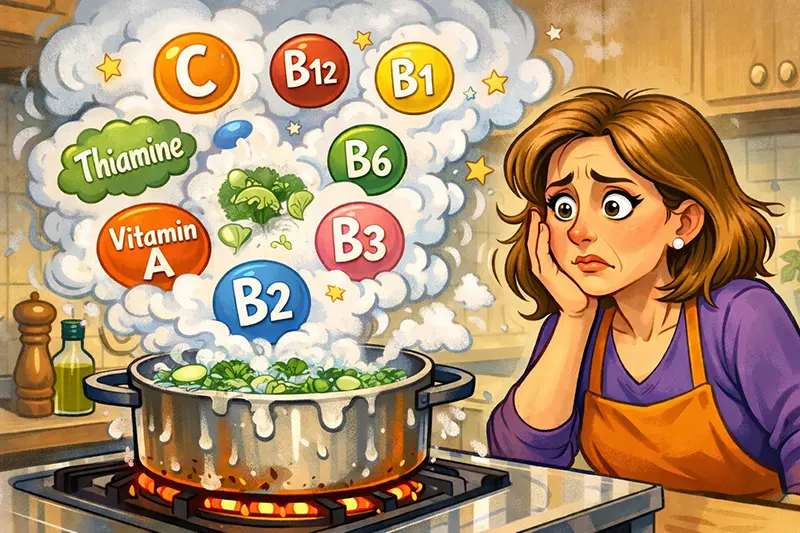
Any form of cooking—the application of heat—will affect the nutrients in food. Cooking will decrease the levels of some nutrients but for other nutrients it will make them more available for your body to use. The source of the heat really doesn't matter. For most foods, the biggest nutrient losses come from long cooking times, high heat, and lots of water. Boiling causes the most nutrient lost because some nutrients are leached out into the water and thrown away. Microwave cooking, with its minimal use of water and short cooking times is a champ when it comes to preserving nutrients.
Why Microwave Cooking Often Preserves More Nutrients
The superiority of microwave cooking when it comes to preserving nutrients is due to several factors.
- Shorter cooking times: Microwaves cook food quickly. Less exposure to heat means fewer nutrients are broken down.
- Minimal water use: Unlike boiling, which can leach vitamins into water that’s often discarded, microwaving typically uses little to no added water.
- Lower heat: Microwave cooking never exceeds 212°f, the boiling point of water. Sautéing, frying, and baking go much higher. And high heat destroys nutrients.
Steaming is the equal of the microwave when it comes to nutrients. This is when food is suspended above, and not in, boiling water, so nutrients cannot be leached out.
What About Sous Vide?
Sous vide cooks food in sealed pouches with minimum or no contact with water and it uses relatively low temperatures. If you are not familiar with this technique, you can learn about Sous Vide here. These facts about sous vide means it is excellent at preserving nutrients. It is by its very nature a slow process, however.
You Might Enjoy These Microwave-Related Myths
Is serious microwave cooking possible? You bet!
Baked potato in the microwave? Sorry, no way!
No, microwave cooking does not make food poisonous!