This very sensible sounding idea does not work in reality, and in fact may actually promote cracking!
Pinholes and Egg Cracks
This myth is based on the reasonable idea that eggs crack, when being hard- or soft-boiled, because the air that is trapped in the shell expands from the heat, putting pressure on the shell which then cracks. The pinhole is supposed to release this pressure before it can cause a crack. Reasonable, yes, but tests show that a pinhole really does not reduce cracking. Rather, cracks occur either because the egg already has an invisible crack in the shell, which expands during cooking, or because the egg is being knocked about in the pan by too-active boiling. And by the way, punching a hole in an egg may cause new cracks that just make things worse!
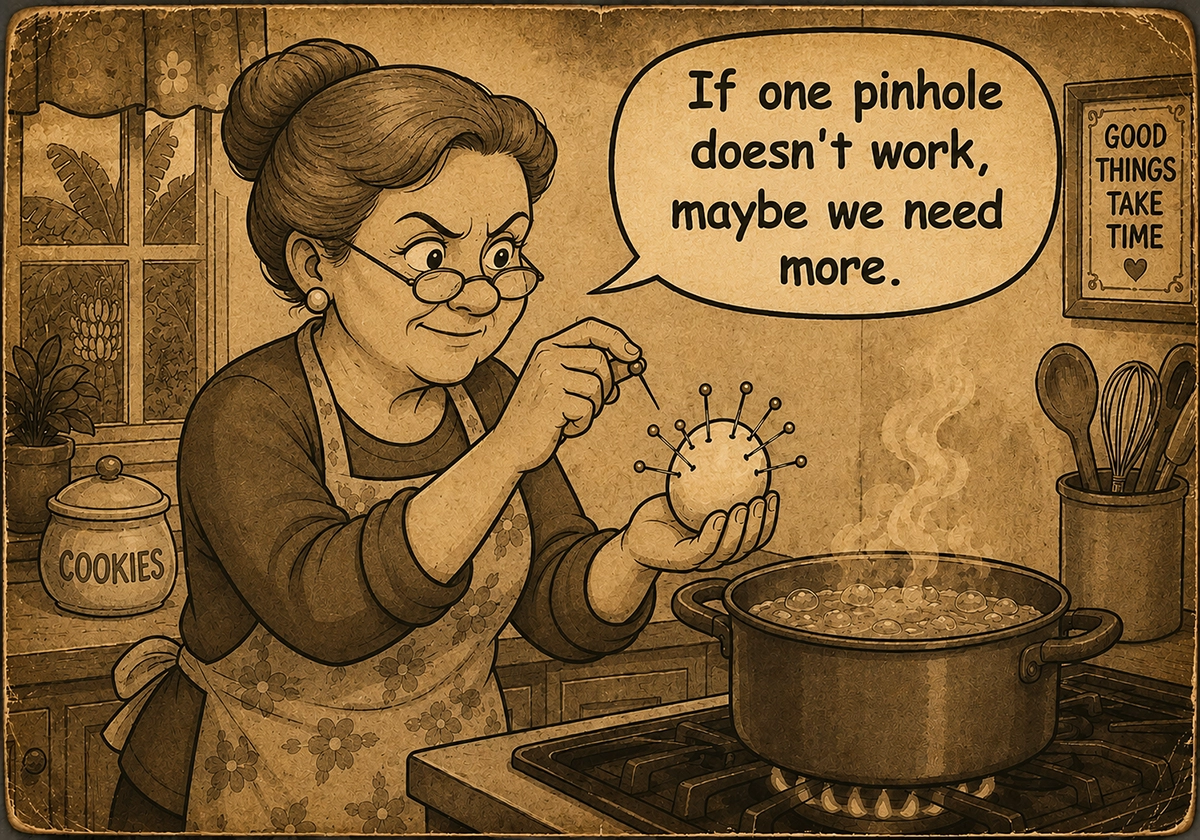

What Does Cause Eggs to Crack?
There is no single cause behind the fact that some eggs crack when they are boiled. Some people claim it is thermal expansion, but that's not the case as I explain in this post. The fact is, cracks that appear during cooking are almost always cracks that were already there. Thin invisible cracks may be the result of rough handling during processing or handling of the eggs. When you heat the egg the crack expands and it becomes visible, sometimes even letting some of the egg white ooze out. If you cook the eggs at a rapid boil, the bouncing around may cause new cracks.
The best approach seems to be to inspect your eggs for visible cracks before cooking, to handle them gently, and to cook in a gentle simmer not a rapid boil (or steam them). And if you need pretty eggs, for example to make deviled eggs, you might want to cook a couple of extra.
Why Do Eggs Have an Air Pocket?
An egg shell is porous which means that the moisture in the egg very slowly evaporates and is replaced by air seeping in. Remember, if the egg is fertilized the developing chick needs oxygen! Even in an unfertilized egg, over time the evaporation and slow entry of air lead to a larger air pocket. And it is true that the size of the air pocket is related to the age of the egg. A large air pocket does not however mean that the egg is stale or spoiled, just older! Learn the details in this post.