This is a misconception. Frozen fruits and vegetables are nutritionally comparable to fresh produce and can be superior to fresh items that are old.
Frozen Produce Retains Nutrients Very Well
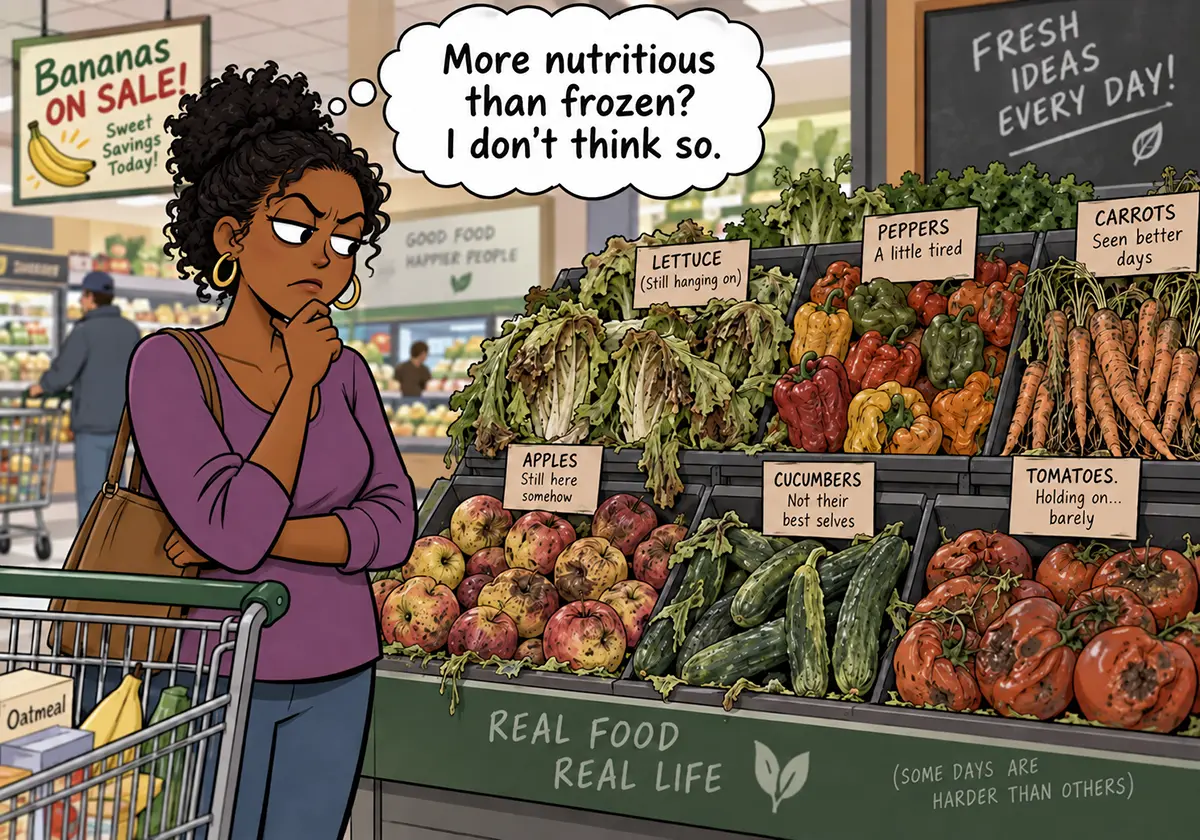
It is a myth that freezing destroys nutrients in fruits and vegetables. Frozen fruits and vegetables are generally nutritionally comparable to fresh produce—and can be equal or better when “fresh” items have spent several days in transport, on display, or in your refrigerator. The decisive factor is usually how soon the food is eaten after harvest, not whether it was frozen. It is true that really fresh produce is always preferable if only for taste and texture reasons, but most of us must rely on what the supermarket offers. And that is always a mixed bag!
What About Berries and Antioxidants?
If you include berries in your diet because of the antioxidants they contain, you'll be glad to know that frozen berries are just fine. They generally retain about the same antioxidant potential as fresh berries, especially when the alternative is supermarket berries that have spent days in transport and refrigerated storage. For blueberries in particular, controlled studies found no significant loss of total anthocyanins or measured antioxidant activity after three months frozen.
Some Other Nutrition-Related Myths for You!
It's true, farm eggs give better nutrition than factory raised eggs.
Does microwave cooking reduce nutrients? Fortunately, it does not!