Not really! An examination of the facts shows clearly that neither gas nor electric has an overall advantage over the other for the serious home cook. And there are also health and environmental concerns related to the use of gas for cooking.
Gas is Better for the Serious Cook...Right?
It has become almost an article of faith that gas cooktops are better than electric, and that any "serious" cook should aspire to owning one.One reason foir this preference is, I think, because almost all TV chefs use gas cook tops, but the facts say otherwise. This belief does not stand up to intelligent scrutiny, however. Gas cooktops are fine, of course, but when comparing them to electric you will see that there's no overall objective superiority. Let's take a look at some of the ways gas and electric differ—and then a have brief look at induction cooking.
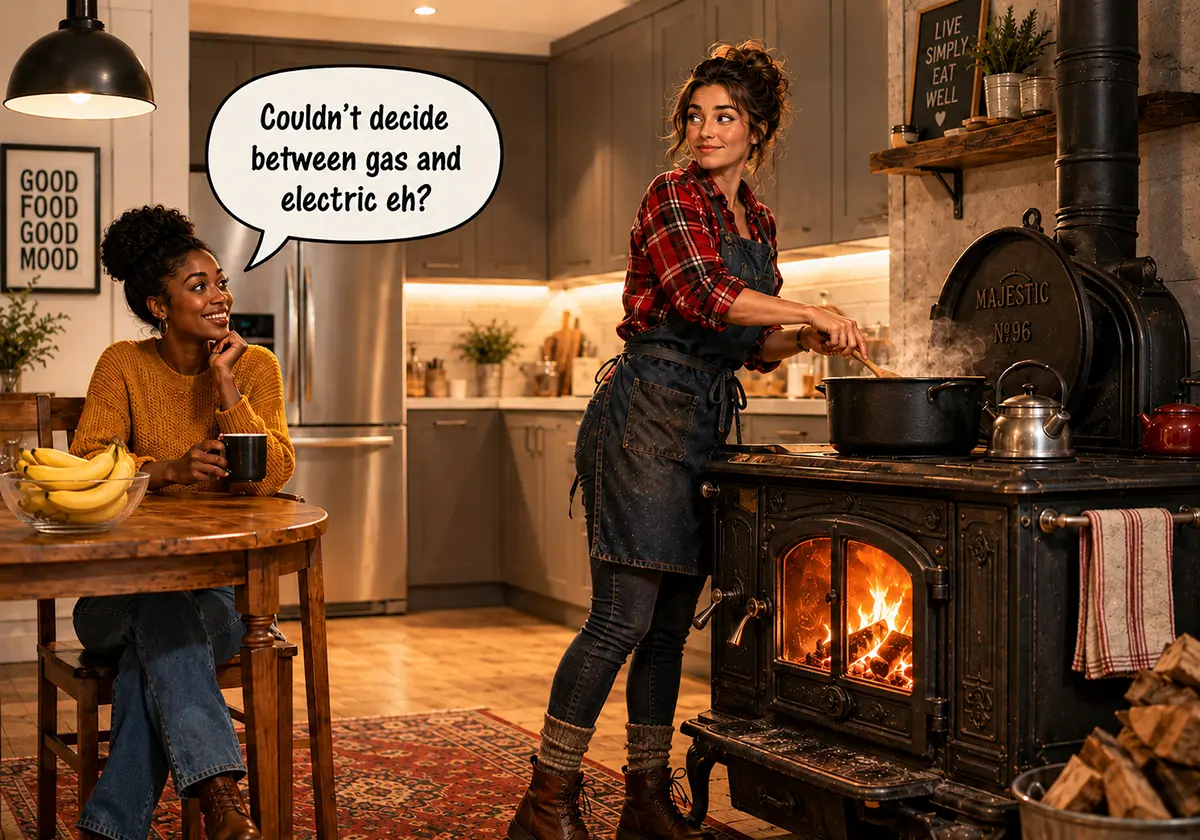
Looking at the Facts
The list here compares gas and electric cook tops from a purely cooking perspective Health and environmental concerns are covered in the next section.
- Simmering. Many gas stoves, particularly high-end ones, have greatly improved simmering. For slow, even, worry-free simmering, however, electric is still the champ. Winner: electric.
- Boiling speed. In comparison tests, gas stoves are almost always slower to boil a pot of water than an electric stove with the same BTU rating. This is probably because a lot more heat escapes into the room with gas (see below). Winner: electric.
- Use with a wok. Woks are designed for cooking over an open flame, and the fast response speed of a traditional thin steel wok will be compromised when used on an electric element. If you have an electric stove you can do a perfectly good stir fry by placing a flat-bottomed wok directly on the element, but a round bottomed wok over a gas burner is much better. Winner: gas.
- Escaping heat. It's unavoidable - a gas burner produces a lot of hot gasses that have no choice but to flow up and around your pan and into the kitchen. This means that less heat gets into your food, the pan's handles may get very hot, as will a utensil left with the handle hanging over the side, and the room heats up more. With electric and a pan that is not too small for the element, more heat goes into the food and less into the handles and the room. In addition, gas ovens vent more heat than electric ovens. Winner: electric.
- Choice of pans. Electric stoves, particularly the flat top models, require the use of pans with reasonably flat bottoms. The bottom does not have to be perfectly flat - which is essentially impossible anyway - but if the pan is too far off flat the efficiency of heat transfer will be lowered. Plus, pans with a convex bottom (bowed out) can be unstable on a flat top stove, rocking or spinning while in use. In contrast you can use pretty much any pan on a gas stove regardless of how flat the bottom is. Winner: gas.
- Cleaning. While the old-style coil electric burners are not all that easy to clean, they are still easier than gas because you do not have to worry about gunk getting into the burner openings. Needless to say, the new flattop electric ranges are a breeze to clean. Winner: electric.
- Power outages. It goes without saying that an electric range is useless when the power is out. You can use gas with no power although you might need to light it with a match (if the igniters are electric). Winner: gas.
It is clear that while gas and electric have definite differences from the cook's perspective, neither one nor the other comes out a clear winner.
Health Concerns Related to Gas Cooktops
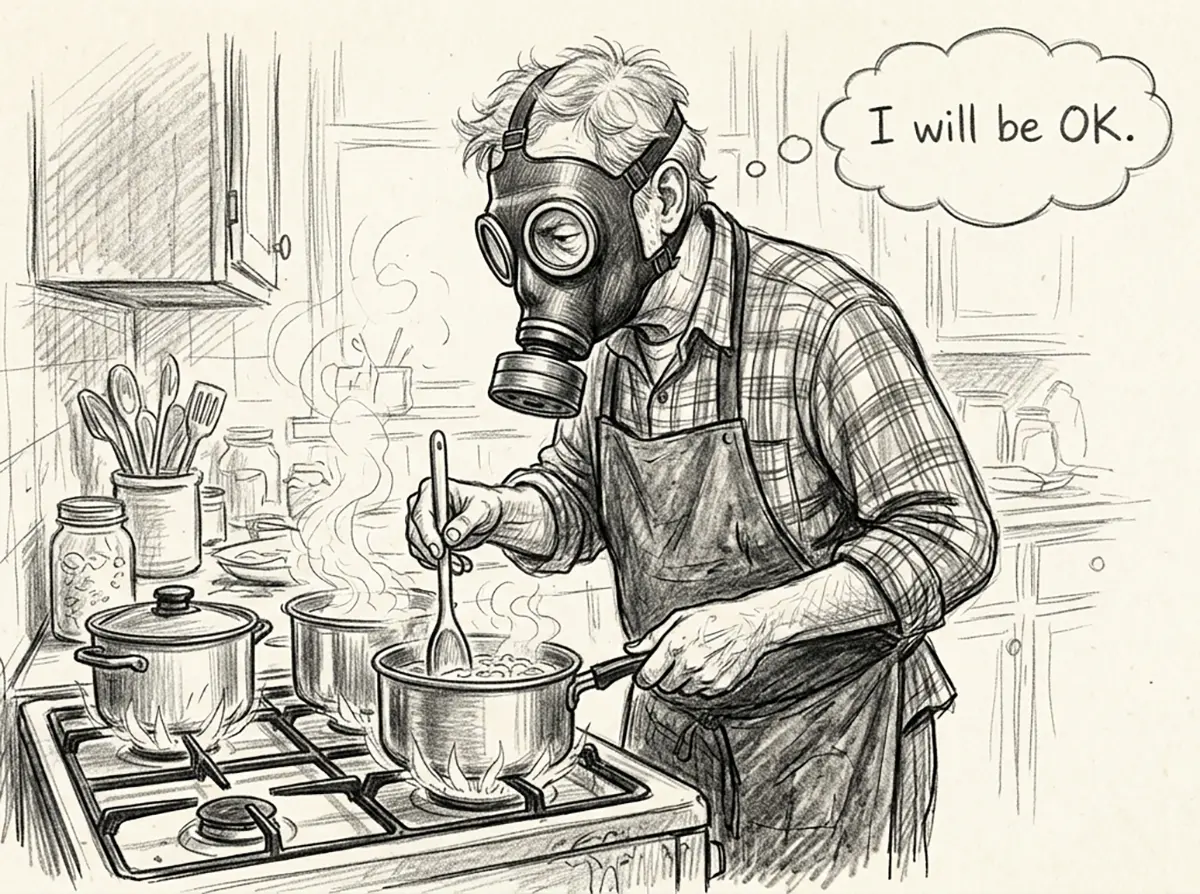
There is more and more evidence that the fumes created by burning natural gas or propane can have long-term negative effects on health, as can the small amounts of unburned gas that inevitably escape from the system. Use of gas stoves is associated with higher levels of nitric oxide, carbon monoxide, and volatile organic compounds (VOCs) such as benzene, a known carcinogen. Some studies have suggested links between gas cooking and higher rates of childhood asthma and other respiratory problems.
An outside-venting range hood alleviates indoor pollution from gas cooking but does not eliminate it. Not everyone has or can install and outside-venting fan. The kind of hood that just blows the air back into the kitchen is useless in this regard.
Environmental Concerns
The effects of global warming are all around us, and natural gas is a serious contributor to the problem—not just the CO2 released when it is burned, but the huge quantities of methane (a greenhouse gas) that escape during production and transport, and natural gas is over 90% methane. The amount of gas used for cooking is small compared to industrial uses, true, but still it would be better to move away from natural gas for any use. Electricity can be sourced from carbon-neutral sources and these are increasingly common and economical.
About Induction Cooktops
Induction cooktops are a relatively new technology in which the "burner" emits a strong magnetic field which in turn causes the pan to heat up. So the cooktop itself does not get hot, only the pan. Simmer control is excellent. It offers instant response, like gas, and it is a flat-top so cleaning is easy--plus, as the surface does not get hot, there's no more burnt on food. It's a bit more efficient than gas or electric, so (slightly) lower electric bills. But the induction units themselves are quite a bit more expensive although prices have been coming down. Induction ranges have electric ovens.
What's the downside (there's always a downside)? You have a limited selection of pans to use on induction because induction works only with magnetic pans such as cast iron (including enameled cast iron like Le Creuset) and carbon steel. Aluminum and copper pans? No dice. Non-stick pans? Some work, some don't, depending on what the pan's body is made of. Stainless steel pans? Again, some work and some don't. There's an easy way to tell: if a magnet sticks to the bottom of a pan, it will work with induction. The stronger the magnet holds on, the better the pan will work.
Some Other Heat-Related Myths for You!
Searing meat is a good idea, but maybe not for the reason you think.
Have a pressure gauge on your propane grill? It's useless.