This old saw has been around for ages, partly because meat cooked over low heat will leak liquid while meat cooked over high heat—seared—appears not to. The high heat, it is claimed, forms a waterproof skin on the meat, so the liquid stays in the meat and the meat turns out juicier. But that's not what is happening.
What Happens When You Sear Meat?
When you cook meat, the collagen fibers in the flesh contract and squeeze liquid out of the meat regardless of the cooking temperature. With high heat, the liquid boils away immediately and you never see it, while at lower temperatures the liquid accumulates in the pan where you can see it. The sizzle you hear over high heat is in fact the sound of that liquid rapidly boiling away. The crust that forms on the meat may look protective but is not a waterproof seal.
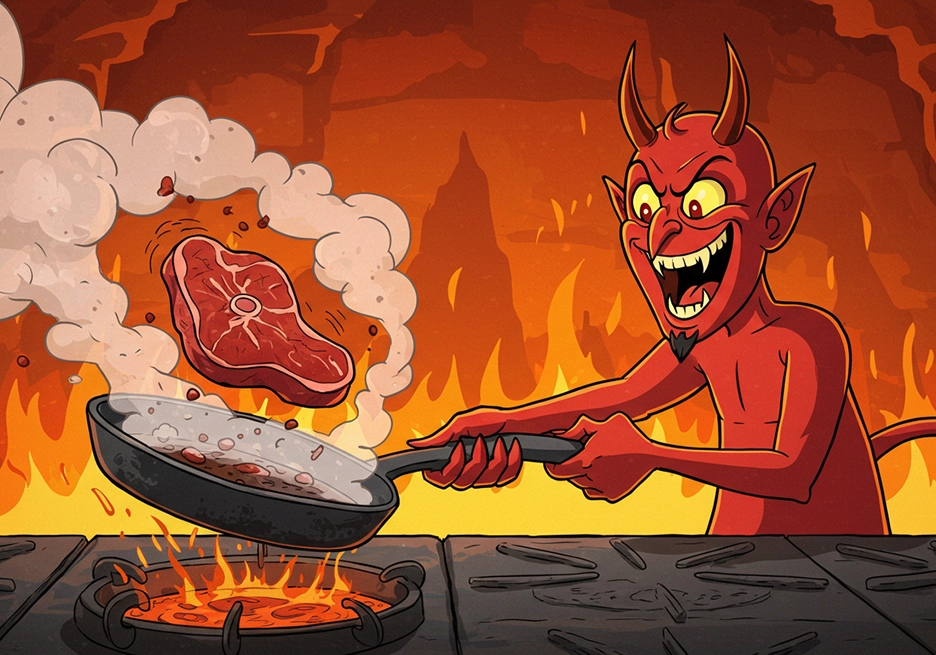
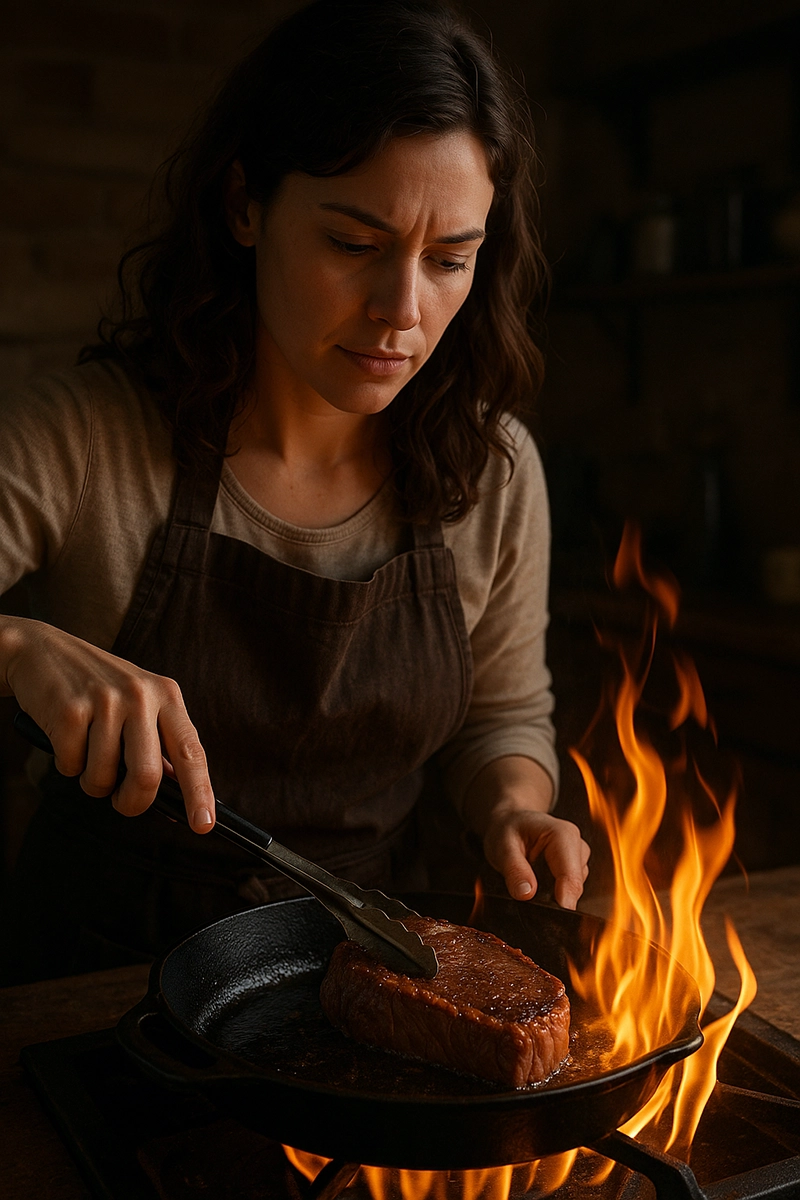
Searing is Important for Flavor
Searing is important for a real reason, specifically the Maillard reaction. When the proteins and sugars in meat are exposed to high heat, a host of chemical reactions takes place, and lots of new flavor elements are created. It is these flavors, both in the browned surface of the meat and in any pan juices that result, that make seared meat taste and smell special. If you want juicier meat, the bigger factors are not overcooking it and letting it rest properly after cooking.
If you use a cast iron pan for searing, you might have some misconceptions about how to clean it.
Testing the Myth
Another reason for this myth may be because searing meat that will be stewed, roasted, etc. does indeed give tastier results. It has nothing to do with sealing in the juices, however. Careful experiments took identical pieces of meat and cooked them with and without searing. If searing did seal in juices, then the seared meat would lose less weight during cooking than the unseared piece and thus be heavier after cooking. But that's not what happened. The seared and unseared meat weighed the same. Case closed!
Speaking of Cooking Meat...
Yes it's okay, even better, to flip burgers and steaks more than once.