Not at all! True wild rice is hand-harvested in the wild. More common "wild" rice is a genetic hybrid that is grown in paddies and harvested by machine. The two are very different.
Authentic Traditional Wild Rice
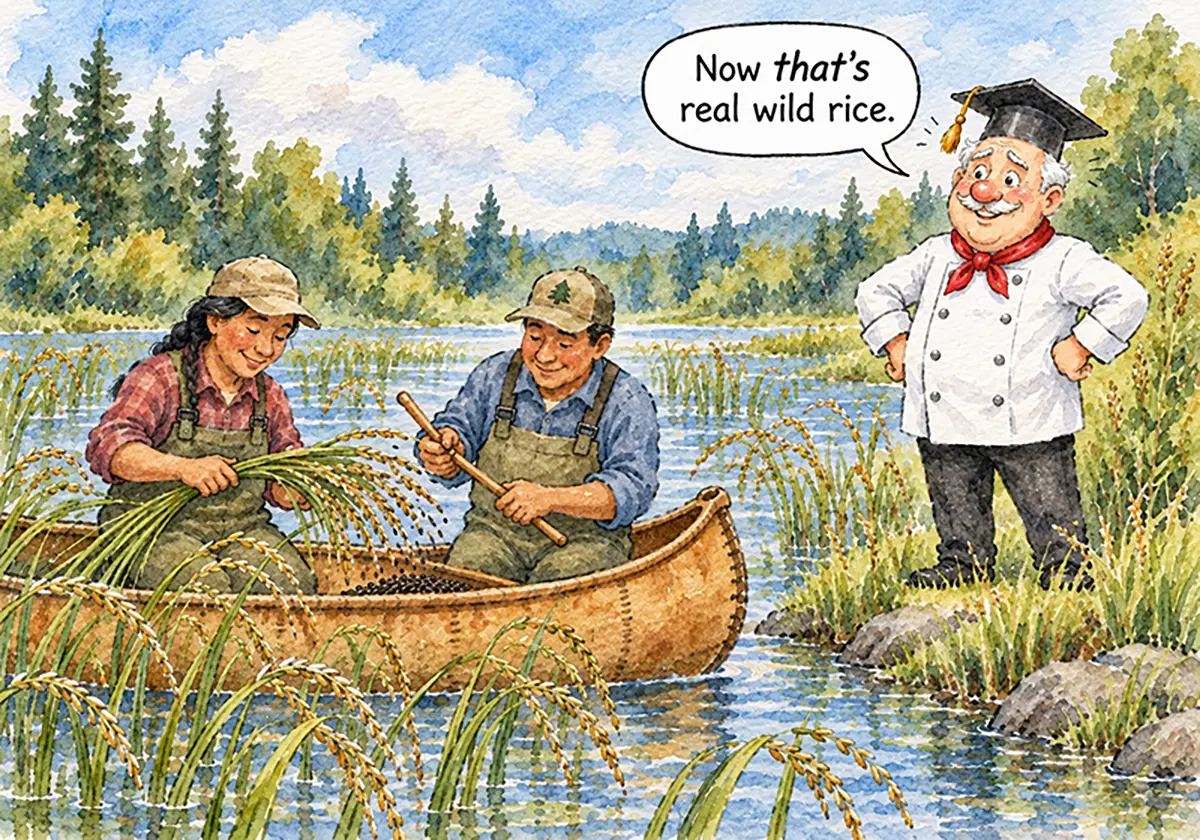
Wild rice is a delightfully tasty grain that has many culinary uses. Its slightly chewy texture and nutty flavor make it a good match in many situations. It's sort of pricey, though, and many people have never even heard of it. But if you want to give it a try, be aware that all "wild rice" is not the same. True wild rice grows in shallow lakes and slow-moving streams in the north-central part of the US (Minnesota, Wisconsin, Michigan) and adjacent areas of Canada. It has been a staple food of Native Americans for ages. It is hand-harvested and parched (to remove the husk) using wood fires. It is a medium brown color and is the more desirable (and expensive) kind of wild rice.
Cultivated Wild Rice
The more common kind of "wild" rice is not really wild at all, as it is cultivated in managed paddies, and is often called paddy rice. It is the same species of plant but is a genetic hybrid developed specifically for cultivation. It is machine-harvested and dried using artificial heat. It is very dark brown or almost black in color. Compared with the real stuff, it's a bit chewier, less flavorful, and less expensive. Both kinds of wild rice can be very tasty and used with great success in many dishes. Just be aware of the differences and shop accordingly.
If you want traditional wild rice, seeing "wild rice" on the package is not enough because that will be paddy rice. Look for “lake harvested,” “naturally grown,” “hand harvested,” “Manoomin,” or a named Great Lakes community, lake, or Indigenous producer. Visually, natural rice tends to have uneven coloration and a duller surface; cultivated rice grains are more consistently long, black, and polished. You are unlikely to find authentic wild rice in markets, mail order is your best bet.
It's Not Really Rice at All!
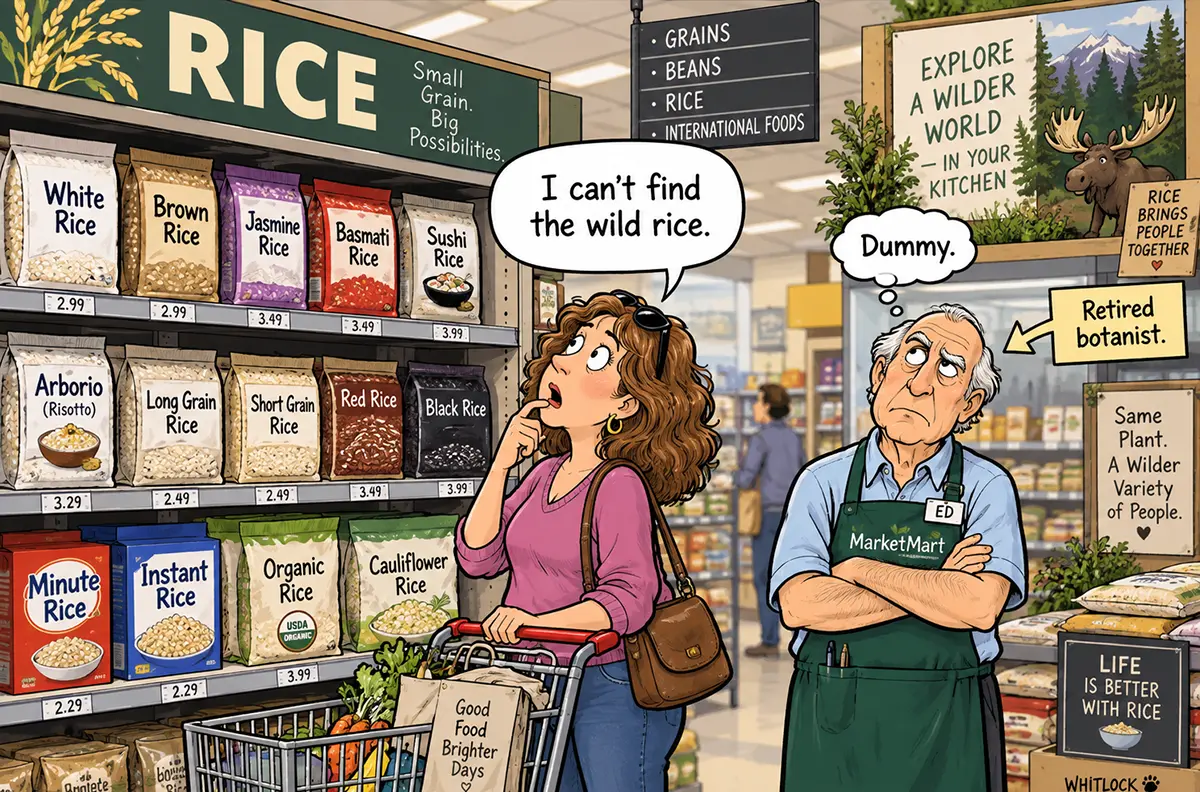
No—not in the botanical sense. Wild rice is the edible seed of aquatic grasses in the genus Zizania, chiefly northern wild rice (Zizania palustris) and annual wild rice (Zizania aquatica). Ordinary white, brown, jasmine, basmati, and most black rice are “true rice” in the genus Oryza, especially Oryza sativa. Wild and regular rice are related in the same way that wheat, barley, and corn are related.
Okay, now you know and are ready for the next game of trivial pursuit!