

Bread going stale is usually not from drying out but rather from crystallization of starch.
Why Does Bread Get Stale?
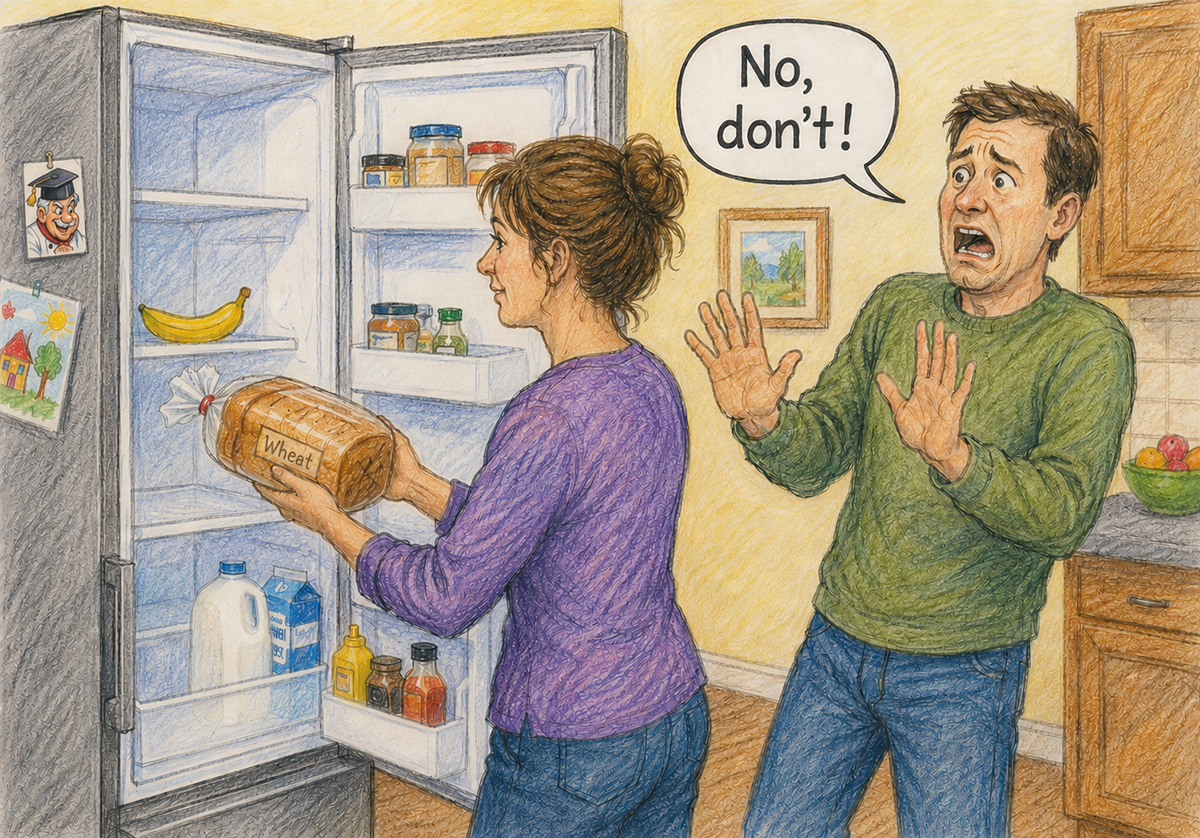
Stale bread - yuck. The crumb (the part inside) gets hard and stiff and the crust loses any crispness it might have had. Most people attribute this to drying out, but the opposite is in fact true. The bread is actually absorbing moisture, as shown by an increase in weight as the loaf goes from fresh to stale. The moisture absorbed by the crumb causes the starch granules to crystallize, hardening the bread. This is why the fridge is a bad place to store bread, even when it is well-wrapped, because low temperatures speed up the starch crystallization process (although freezing bread is fine because starch crystals don't form at freezer temperatures). It's also why a brief visit to the oven can improve stale bread, because the heat drives out some moisture and helps melt the starch crystals. Bread can dry out, of course, but that's another matter.
Differences Between Breads in Going Stale
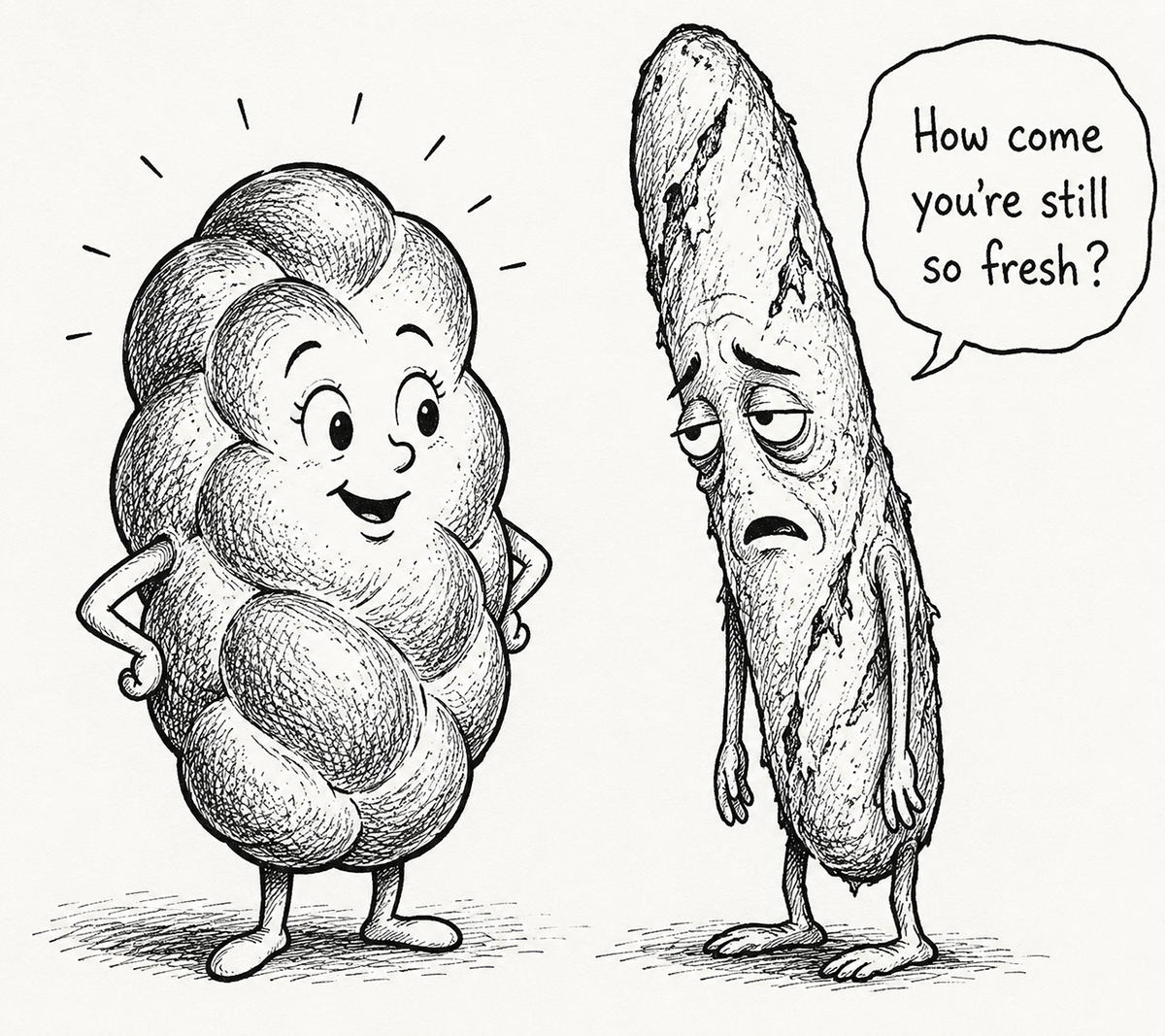
Enriched breads, those that contain added fats such as butter, oil, or eggs go stale more slowly because these ingredients slow down the formation of starch crystals. Commercial loaves often contain ingredients such as emulsifiers, enzymes, and gums that further slow starch crystalization, extending softness compared with typical homemade bread. So-called "lean" breads such as baguettes are the quickest to go stale.


As an organic chemist (retired) and baker, I am quite familiar with retrogradation (starch recrystallization).
I freeze homebaked breads as soon as possible as retrogradation begins almost as soon as one removes the bread from an oven. I agree that refrigeration accelerates retrogradation, but it also retards mold formation. So take your pick: freeze it to halt retrogradation, or leave it at ambient and risk rapid molding.
Now growing up in reduced circumstances in the rural South in the 1940s and 1950s, we didn’t waste anything if it could be helped. Bread pudding was something that appeared on our family table on a regular basis. To this day, I have a fondness for it along with rice pudding, and indeed any puddings–items which have fallen out of favor in modern times.
To be sure, stale bread can also be turned into croutons, bread crumbs, and French toast, which I do from time to time for unused bread.
But perhaps my favorite way of eating those last bits of stale (retrograded) homebaked bread, is with homemade broth. My wife calls it “bread and water.” LOL. But I like it. It is tasty (owing to the broth) and somewhat filling (owing to the bread.) In a pinch, I make the broth from a commercial, semi-solid broth paste base. It’s most often chicken broth, but sometimes beef. In the case of a beef broth, I will also usually add a spoonful of Marmite to boost the flavor (umami) and the Vitamin B content.
Thank you for your interesting reply. I love bread pudding, But for various reasons I never got into making it at home. Maybe this is the motivation I need!