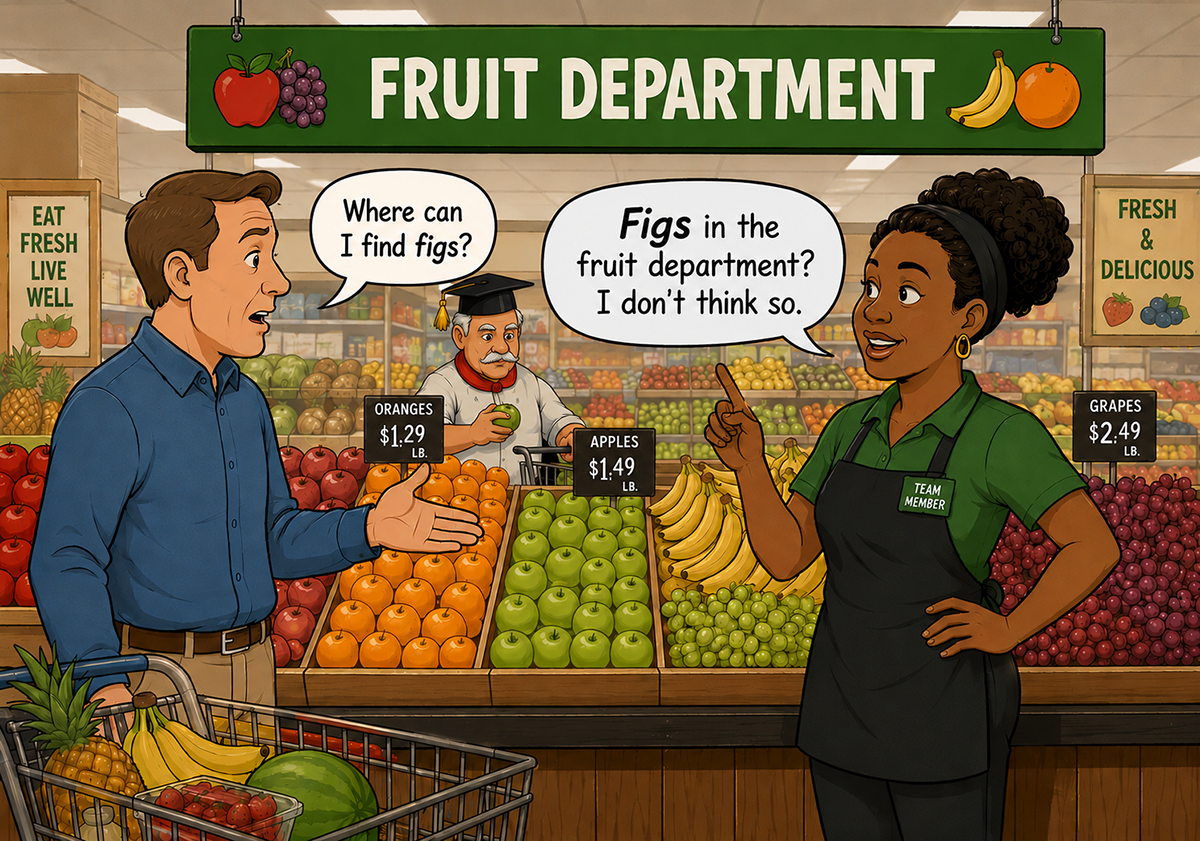
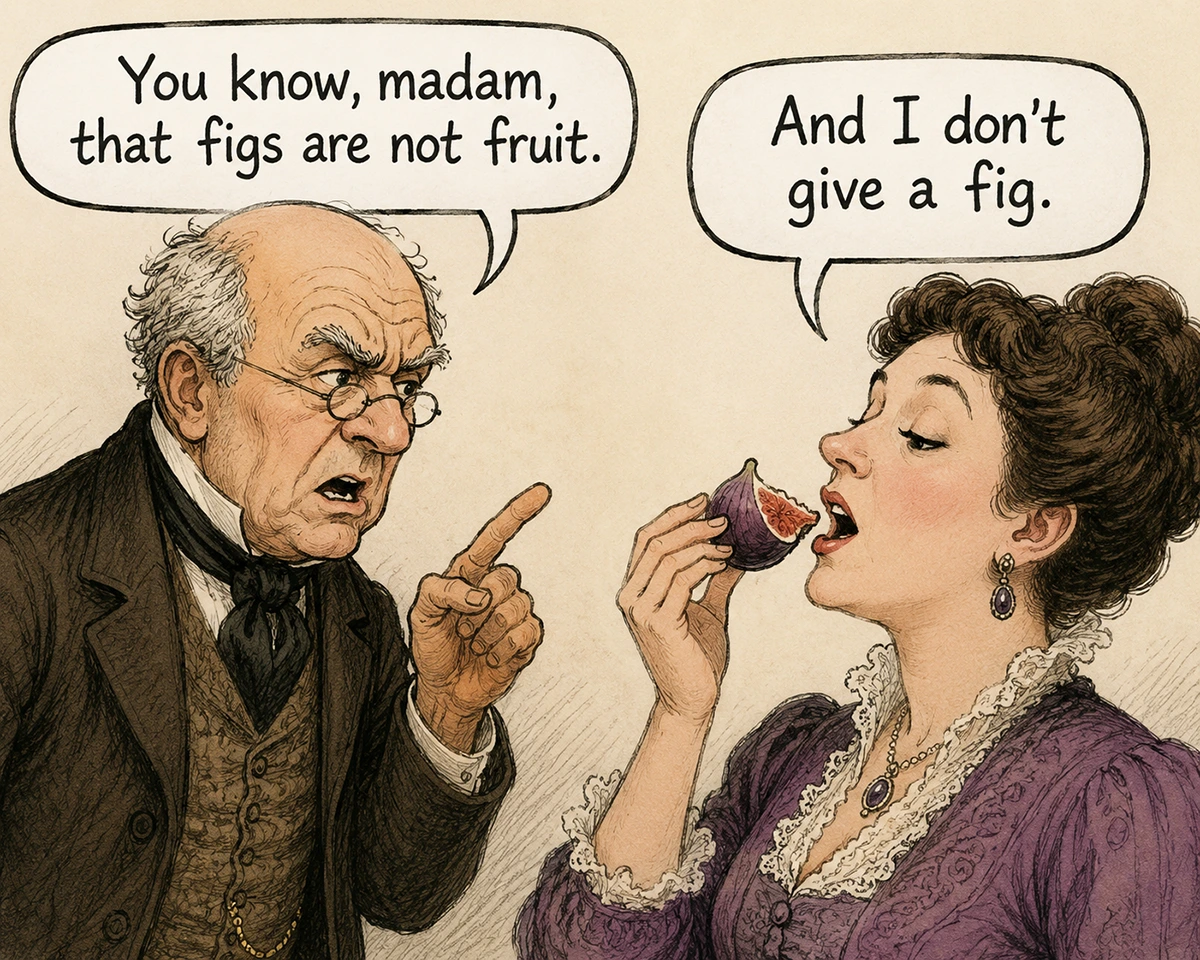
Because they are sweet and typically part of dessert, many people consider figs to be a fruit . But to a botanist they are not.
So What Are Figs?
In fact, the fig occupies a unique botanical category that challenges ordinary definitions of what a fruit is. In everyday language, fruits are understood as sweet, seed-bearing structures such as apples, oranges, or grapes that develop directly from the ovary of a flower. Figs, however, differ significantly in structure, development, and pollination. Botanically, a fig is not a single fruit at all but a syconium, a fleshy hollow receptacle that contains many tiny flowers and seeds inside it. Because of this unusual anatomy, some botanists do not classify figs as true fruits. Instead, they are better understood as an inverted inflorescence, or a cluster of flowers turned inward upon themselves. Each flower turns into a tiny seed and when you cut into a ripe fig you can see all of these seeds.
Figs Do Not Contain Wasps
It is true that figs depend on wasps for pollination. A specialized fig wasp crawls inside the fig to pollinate the small flowers and then it dies there. However the fig has enzymes that digest the wasp and its nutrients are absorbed, so there's no trace of a wasp left by the time it reaches you. The crunching you hear when you eat a fig is not little dried wasps, but the fig seeds.
To a Cook Figs Are Fruit
From a culinary perspective, figs are absolutely treated as fruit. Figs are used like other sweet fruits: eaten fresh out of hand, in desserts, jams, and baked goods. They also work in savory dishes, similar to grapes or apples with cheese and meats (e.g., figs with goat cheese, blue cheese, prosciutto, or on pizza and salads).
Knowing that figs are not technically fruit is certainly not the most important thing you've learned this week! But who knows, this fact might come in handy on Jeopardy someday.
You Might Enjoy These Fruit-Related Myths
Most but not all fruit will continue to ripen after picking.
Love peaches? Know your yellow peaches from the white ones.