Nope. Some folks confuse the two as they are both white condiments that are often spread on sandwiches. But they are quite different.
Mayonnaise and Miracle Whip Are Distinct Products
Mayonnaise is an emulsion of fat and oil, with the fat being egg yolks, along with an acid such as vinegar or lemon juice. Salt is added and often other seasonings. By law, mayonnaise must be 65% oil by weight and the emulsifier must be egg. It's easy to make at home, but most people, me included, rely on the commercial product (don't get me started on Hellman's vs. Duke's!).
Miracle whip, on the other hand, is classified as a salad dressing. The main three ingredients are water (yes, water), soybean oil, and high-fructose corn syrup. Eggs are further down the list and spices are included also. It was developed in 1933 as a less expensive alternative to mayo and has become very popular. But mayo it is not.

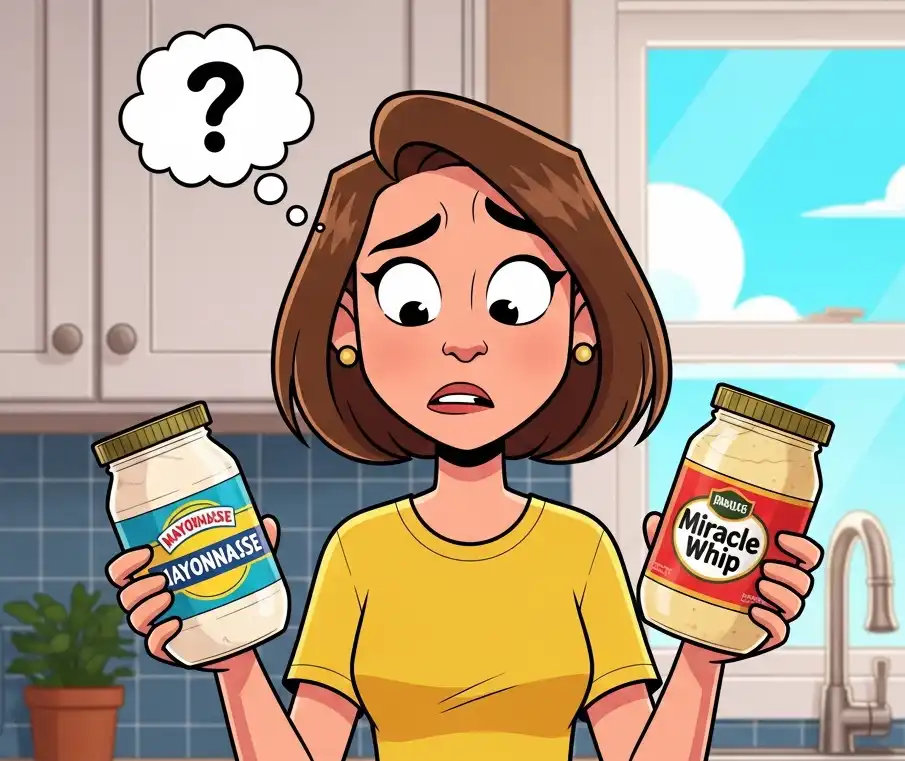
When to Use Each?
It's a matter of personal taste, of course. But as a rule of thumb, Miracle Whip is a bit more zesty and "up front" because of the sugar and vinegar it contains. Some folks therefore consider it more appropriate for sandwiches and salads where the other ingredients have strong flavors. Mayo presents as rich and eggy and complements other ingredients better because it is more subtle. Choose wisely!
The Origin of Mayonnaise
Mayonnaise likely originated in the 18th century in Europe. One story has the origin occurring in Mahón, Minorca (a Mediterranean island off the coast of Spain), after the French captured the port in 1756. It is said that a French chef made a sauce from egg and oil because cream was unavailable. The sauce was linked to Mahón and the name was later modified to “mayonnaise”.
Here's another post about ingredients that are sometimes confused: Russian and Thousand Island dressings!