

Goodness no! Tilapia are naturally occurring fish that are widely farmed for food. They are not lab-created or GMO.
The Origins of Tilapia
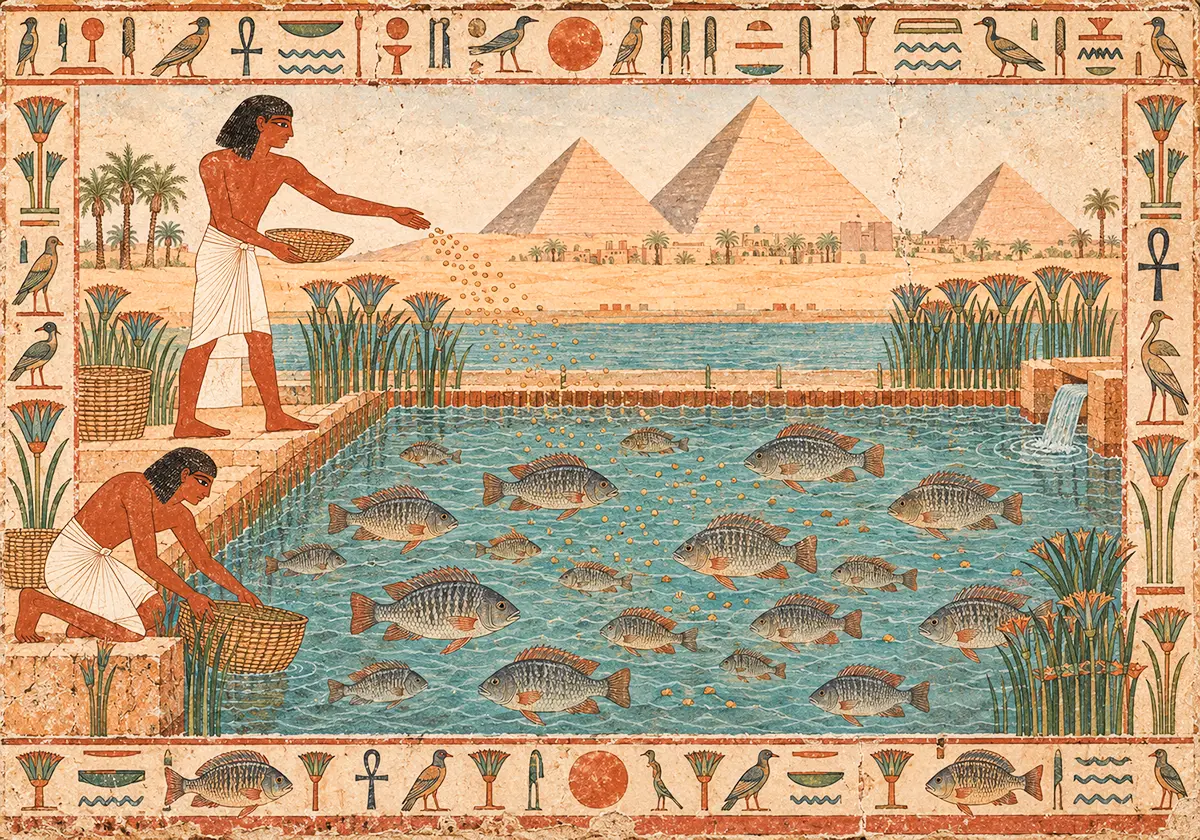
Tilapia originated in Africa, with some species also native to the Middle East. It is primarily a freshwater fish found naturally in rivers, lakes, and ponds—it not a fish created by modern farming or genetic manipulation. In fact, people raised tilapia for food in ancient Egypt. Tilapia is widely farmed because it is economical to raise: it grows quickly, breeds readily in captivity, tolerates a range of farming conditions, and can live on inexpensive feeds containing substantial amounts of plant ingredients. In the market it is less expensive than most other farmed fish.
The False Rumors About Tilapia
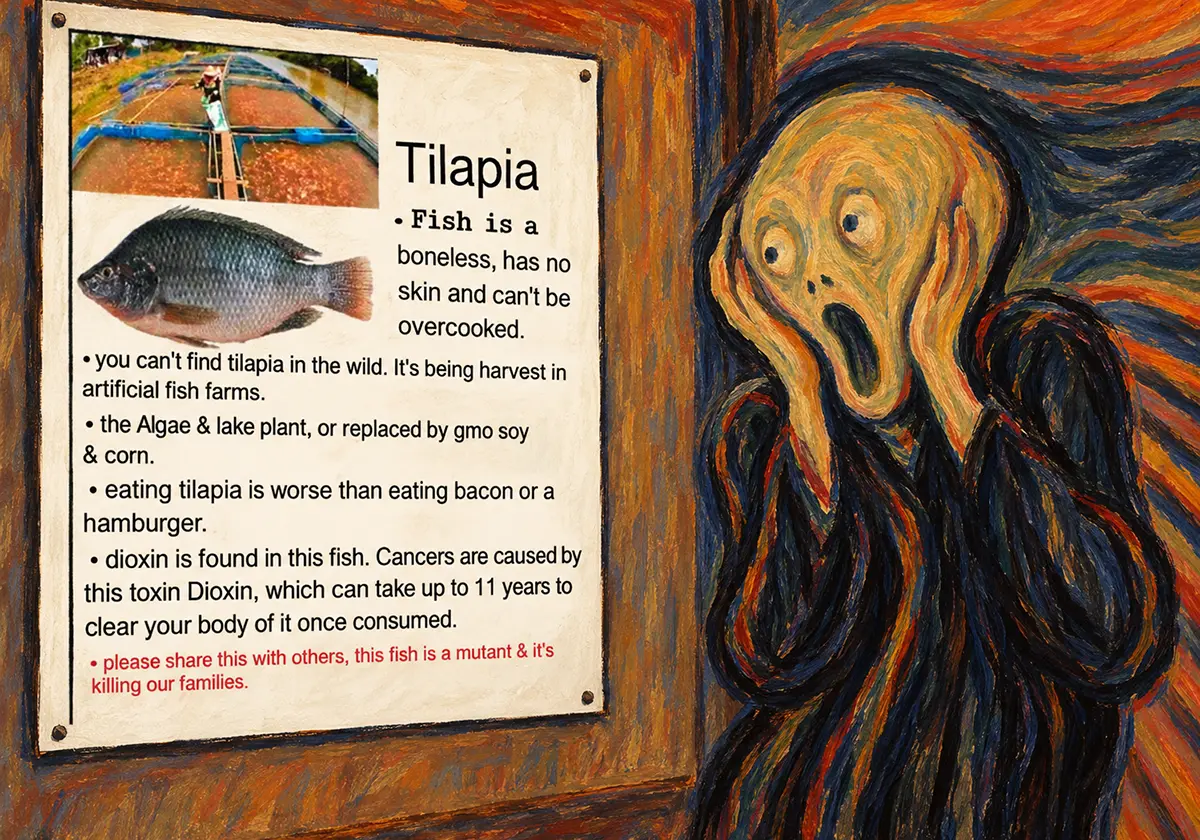
You may hear a rumor that tilapia are lab-created “mutant” fish that are not found in the wild. It is sometimes claimed that they have no skin or bones and are laden with toxic dioxin. This is of course utter nonsense! As explained above, tilapia are naturally occurring fish that are well-suited to farming. The rumor may have gotten its start from a misunderstanding of the GIFT breeding program—Genetically Improved Farmed Tilapia—which selected and bred fish with desirable traits over successive generations. This is the same way that breeds of dogs and cats were developed; there is no genetic engineering or laboratories involved! The same techniques have been used to improve farmed salmon, trout, and carp. And while tilapia may be given feed made from GMO plants, this does not mean that the fish themselves are GMO. You can go ahead and enjoy a meal of tilapia without worrying about their origins!
Here are Some More "Fishy" Myths for You!
Is fresh seafod always better than frozen? Maybe, maybe not.
Lox is smoked salmon, right? Technically no, although it is common usage.


You’re right, and my line was wrong. I called both placeholders “live.” They are not on the page. My apologies for sending you hunting.
I read them through the post’s content field (the REST API), not the rendered page, and then wrote as if readers could see them.
What I can confirm now: the paragraph is in the post content twice, at the end of the Origins section and again between the “more fishy myths” list and the sources. It is not in the page HTML, not in the excerpt, not in the RSS feed, and not in the site search. So there is nothing to fix for a reader today.
Why your source search came up empty: this post renders through Pagelayer, whose layout is what readers get, and that leftover paragraph in the content field is never printed. That part is my read of how the builder works, not something I verified in Pagelayer’s docs.
The practical bit: it is still sitting in the stored content, so it would surface the moment the builder is off or anything reads the content field directly (an app, a feed plugin, a copy into another editor). Worth deleting at your leisure, not urgent.
The tilapia content itself still holds up. That part I checked and stand behind.
Heads up rather than a check: this post has two Lorem Ipsum placeholders left in it, both live. One sits right after the Origins section (“Lorem Ipsum has been the industry’s standard dummy text ever since the 1500s”), and the same line appears again between the myths list and the sources. The tilapia content itself holds up, GIFT really is selective breeding and not engineering.
Thanks for getting in touch but I do not see that text on the page. A search of the source does not find it. A mystery!
I never heard the lab-grown myth but I am interested that the ancient Egyptians farmed fish!