Oh no! In fact a power mixer is probably the worst way to make mashed potatoes.
Why Not a Mixer for Mashed Potatoes?
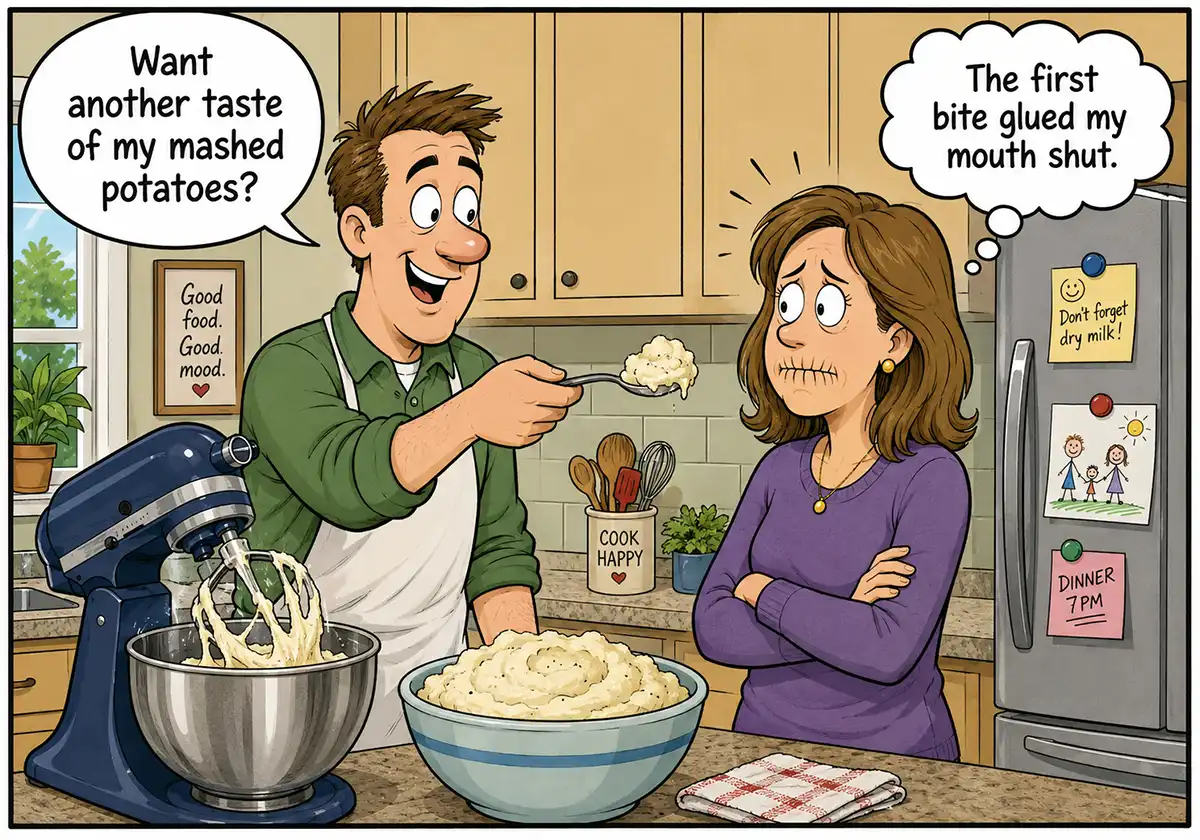
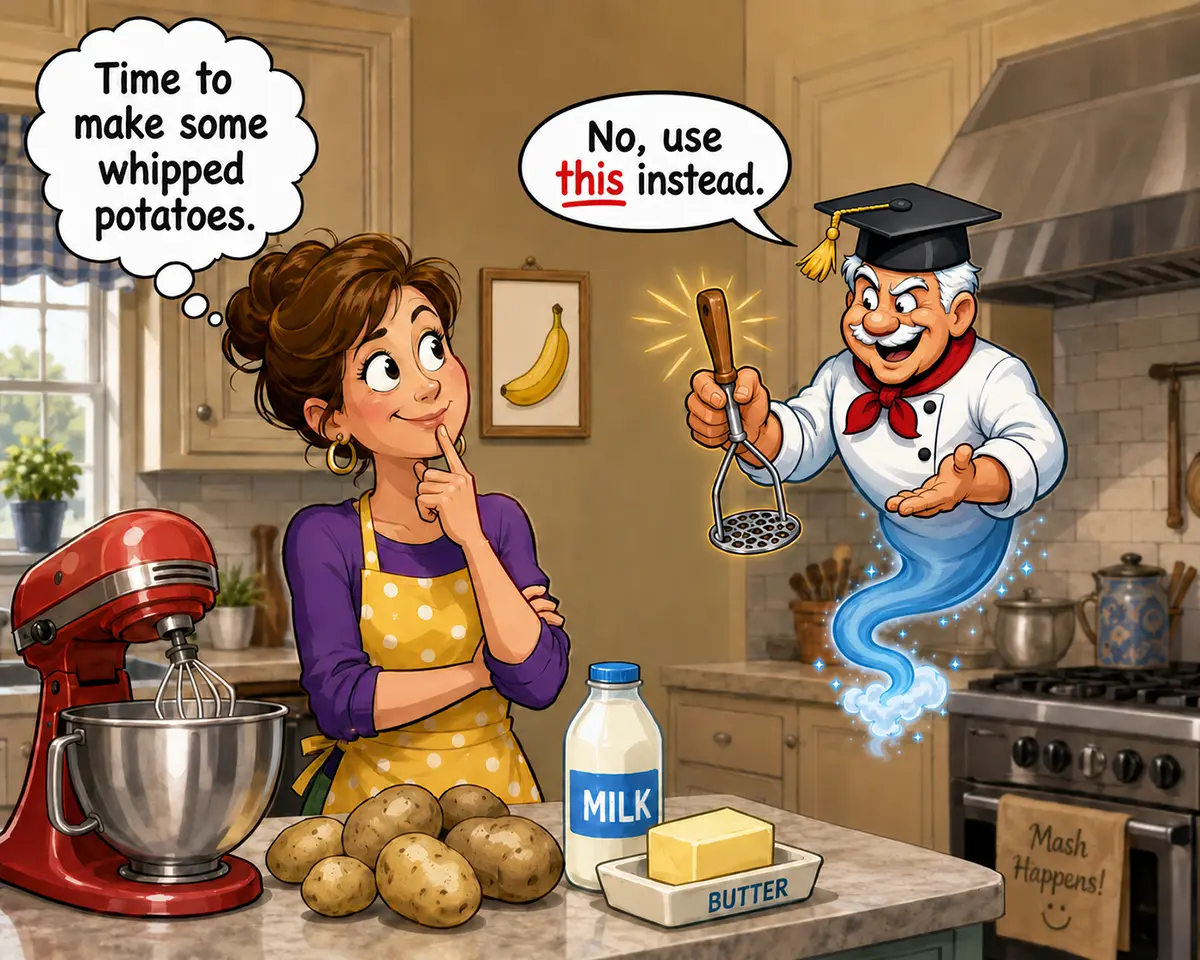
Sure, it's easy to throw cooked potatoes, milk, butter, etc. into your stand mixer and whip them up. In fact, some people ever refer to mashed potatoes as whipped potatoes! But this is actually the worst way to do it, and the same goes for hand-held power mixers. You see, potatoes contain tiny starch granules, and if they stay intact they do no harm. But if they are burst by the mechanical action of a mixer, they release starch which makes the potatoes gummy. Any mashing method will rupture some starch granules, but a power mixer is so much worse than other techniques. Mashed spuds should be fluffy, and gummy is yucky! So, what to do? Fortunately you have several options.
How to Mash Potatoes Properly!
The hand masher is the old stand-by, preferably the kind that has a plate with holes rather than a serpentine wire. The result with this will not be perfectly smooth but that's OK with a lot of people, and preferred by some, myself included. A ricer works really well. This is essentially a huge garlic press with a piston that forces the potato thru a perforated plate. A food mill does much the same thing, using a rotating blade in place of a piston. The advantage is no lumps because all of the cooked potato must pass through the holes, and the minimal mechanical action means that few if any starch granules are ruptured. Both ricers and food mills have uses other than making mashed potatoes.
The Best Potatoes for Mashing
The classic potato for mashing is the russet, or Idaho. It has, when prepared properly, the right amount of starch to give a light, fluffy result. But the additional starch means that russets are the easiest type of potato to over-work into glueiness.
Yukon golds work well for a creamier and denser final product. Half Yukon and half russet is a popular approach! Waxy potatoes such as red skinned, fingerlings, and baby potatoes are generally poor choices for mashing because they stay firmer and can turn lumpy rather than smooth.