Many people believe than an acidic marinade - one containing wine, vinegar, or citrus juice - will make meat tender. In fact, the opposite is often the case.
What Does Acid do to Meat?
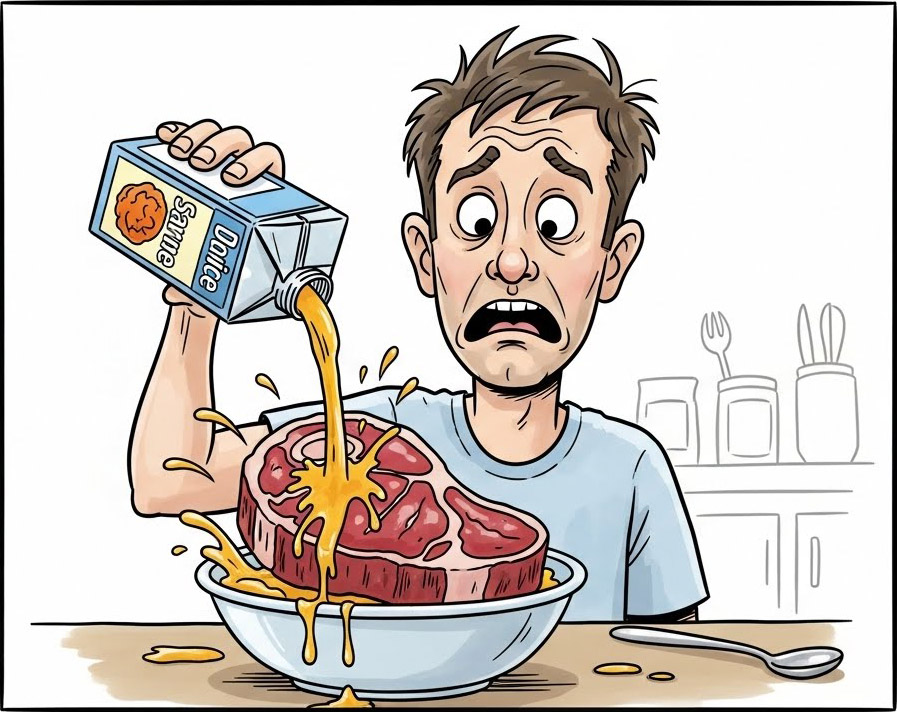
Acid interacts with the proteins in the meat, causing the protein molecules to squeeze more closely together and thus forcing liquid out of the meat. The result is is tougher and drier steak, chicken, or wildebeest. What's more, extended exposure to acid can cause the surface of the meat to become mushy because the proteins start to break down. This can be mis-interpreted as tenderness but it is really just a mushy surface! The rule, then, would be to keep acidic marinade periods short, but then of course the flavor won't get into the meat very well - which it doesn't really do anyway.
Tenderizing That Really Works
A chemical method to tenderize meat that actually works is the opposite of acidic (pH below 7), but rather alkaline (pH above 7). It is common in Chinese cuisine where meat is usually cut into small pieces before cooking. A very small amount of baking soda (perhaps 1/2 tsp per pound of meat) is stirred in and allowed to sit for a while before cooking. This treatment is often part of the velveting process that gives the meat in Chinese restaurant stir fries its special texture and tenderness.
Marinades and Safety
Do not rely on an acidic marinade to kill bacteria. Meat should be refrigerated during marination and extra marinade should be boiled before further use, in making a sauce for example.
A Better Approach to Marinating Meat
My approach is to rely on non-acidic marinades. The fact is, marinades in general don't have nearly the effect that many people think because the flavors just cannot penetrate beyond a millimeter or two at the surface. Salt and water in a marinade can penetrate deeper, and the benefit of most marinades is the result of this factor.
And here's another meat cooking myth that I have busted, this one about searing meat.