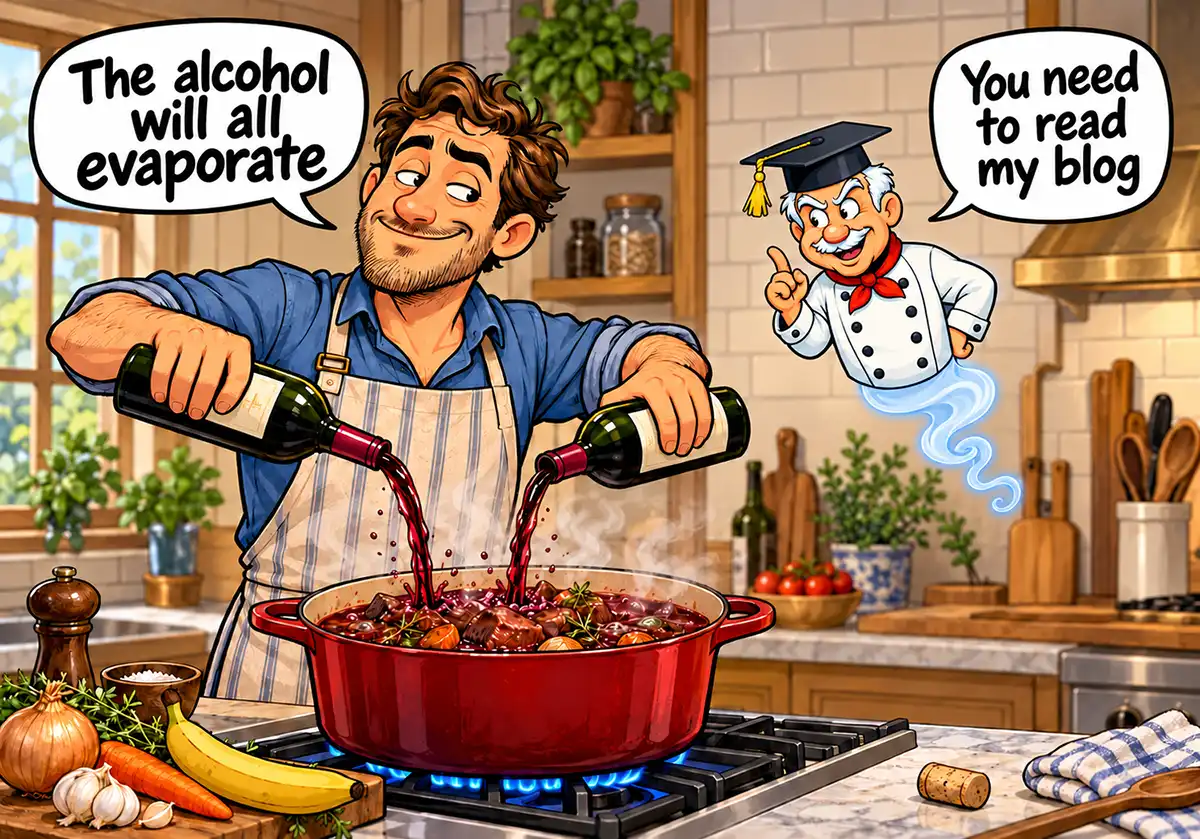
You might think that the alcohol would all evaporate, but no. Some alcohol can remain even after extended cooking.
Alcohol in Cooking Does Not All Disappear
Here's another "common sense" myth that turns out to be false. Alcohol has a lower boiling point than water so it should all evaporate first, right? Nope—that's not the way it works. The alcohol will evaporate faster than the water but there will still be some left after even extended cooking. The table below shows just how much alcohol is left after different methods and periods of cooking. The amount of alcohol remaining is not going to get anyone tipsy, but for people with medical issues or religious restrictions, this is something a cook should know.
Alcohol Remaining After Cooking
This table gives the percent of the original added alcohol that remains after cooking, for various cooking times and techniques. These are averages from lab tests and cannot be considered to be precise values for every situation.
| Preparation method | Original alcohol remaining |
|---|---|
| Added to boiling liquid, then removed from heat | 85% |
| Flambéed (set alight) | 75% |
| Stirred into food, baked or simmered for 15 minutes | 40% |
| Stirred into food, baked or simmered for 30 minutes | 35% |
| Stirred into food, baked or simmered for 1 hour | 25% |
| Stirred into food, baked or simmered for 2 hours | 10% |
| Stirred into food, baked or simmered for 2½ hours | 5% |
Here are Some Other Alcohol-Related Myths for You!
Is non-alcoholic beer really alcohol free? Maybe not.
Does coffee help get you sober? 'Fraid not.