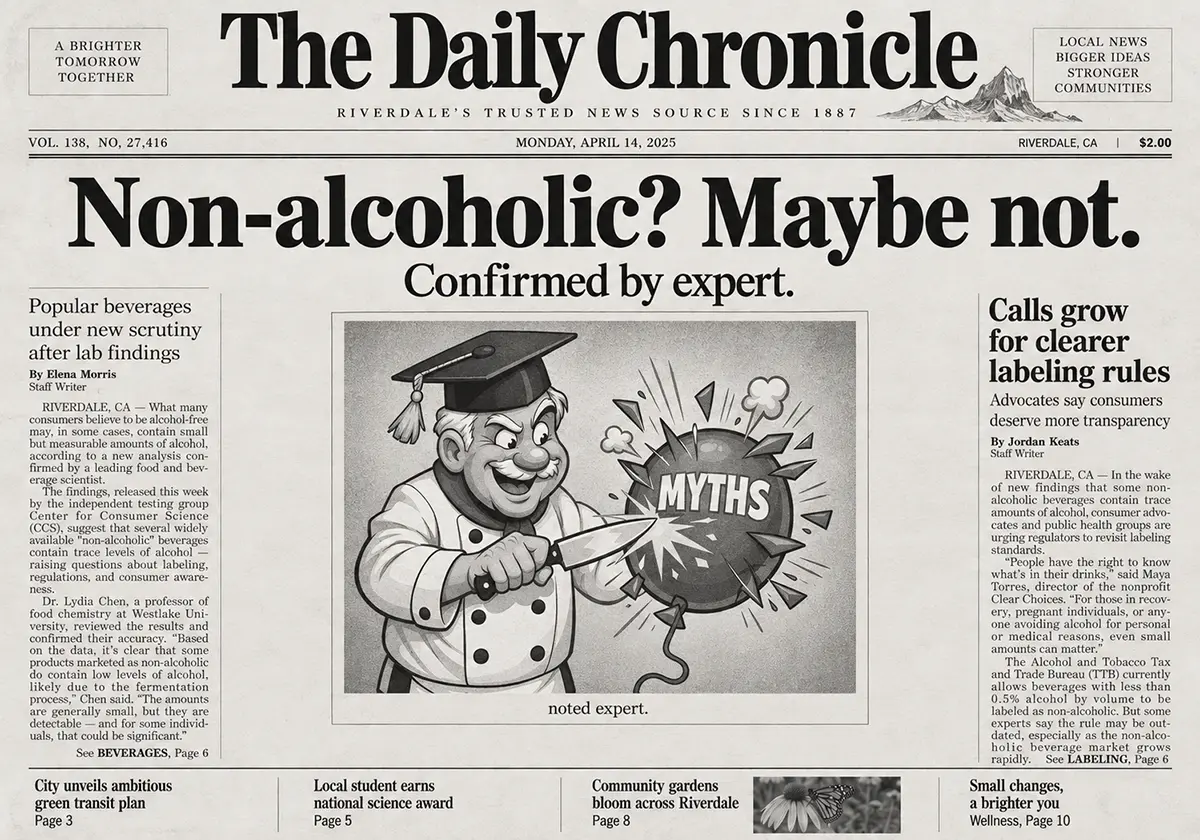
Not necessarily. “Non-alcoholic” beer in the U.S. can legally contain up to 0.5% alcohol by volume (ABV), so it is not guaranteed to be 0%.
What Does Non-alcoholic Really Mean?
Non-alcoholic, or N/A, beer has become very popular. Many folks are surprised to learn that some N/A beers contain some alcohol, up to 0.5% by volume (ABV). That's not much, to be sure—a regular beer contains 4-6% ABV, and higher in some specialty brews. But don't be quick to expect literally zero alcohol, if that's what you want. Some people argue that 0.5% is meaningless health-wise or that some foods, such as ripe fruit, contain naturally occurring alcohol. Be that as it may, some people want to avoid any alcohol in their beverages, for religious or whatever reasons, so these distinctions may be worth noting.
What the Terminology Means
The term "non-alcoholic" is reserved for beers with less than 0.5% ABV. Anything above that is considered an alcoholic beverage—beer–and is not part of this discussion. In contrast, the term "alcohol-free" is reserved for products that literally contain no alcohol—none at all. And while the term "zero alcohol" is not specifically regulated, it is in practice limited to beers with zero alcohol due to truth in labeling laws.
So, on a U.S. beer label, “alcohol-free,” "zero alcohol," and “0.0%” mean none, while “non-alcoholic” can still mean a small amount—anything below 0.5% ABV. Examine the label to be sure you are getting what you want.