

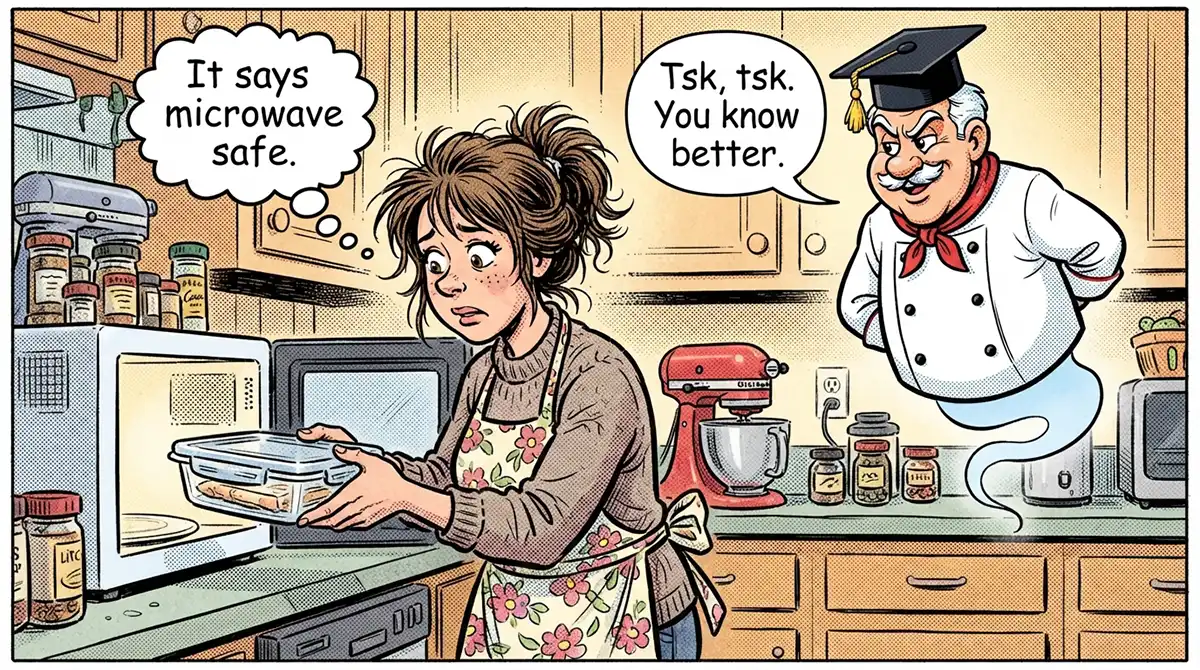
The term microwave safe means only that the container won't melt or warp in the microwave. It does not guarantee that it won't give off potentially harmful substances into your food when heated.
What "Microwave Safe" Means
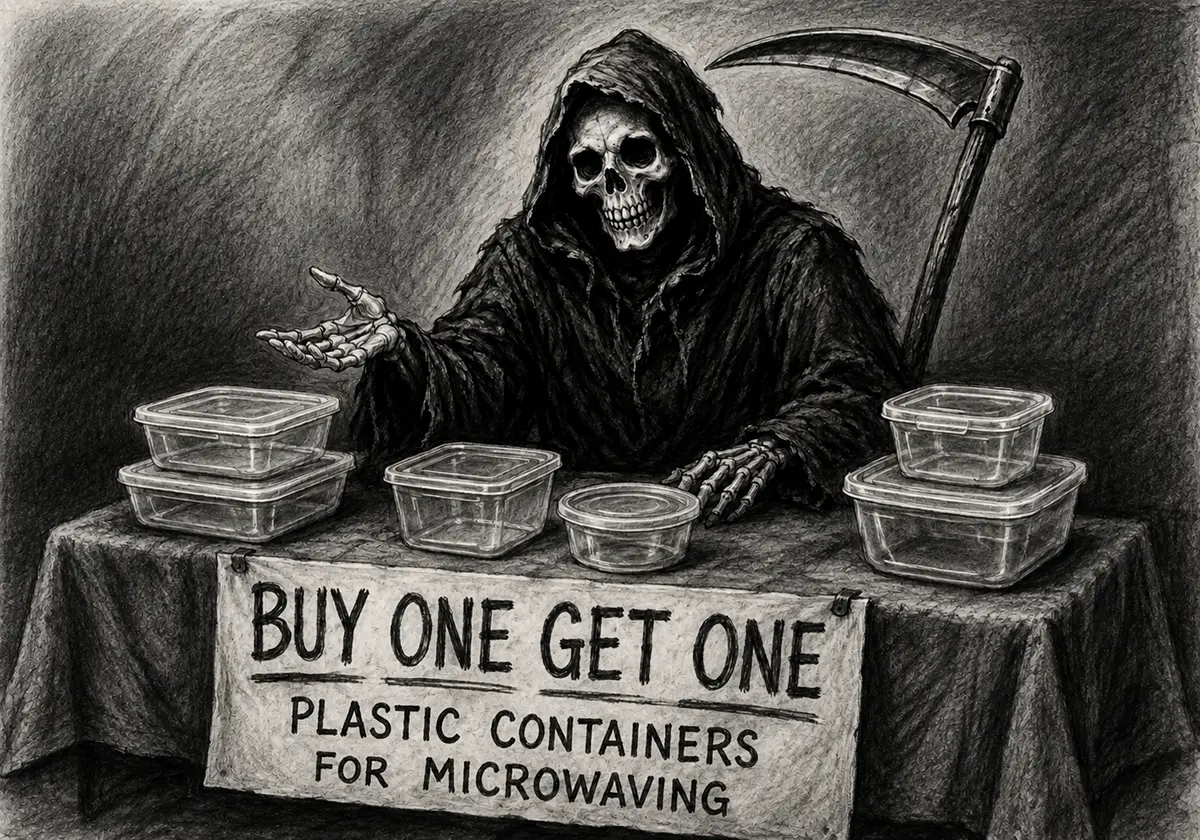
“Microwave-safe” usually means the container can handle microwave heat without warping or melting, but it does not guarantee it is free of chemicals or that nothing will migrate into food when heated. Heat can release additives such as phthalates, PFAS, and other compounds into food. While most microwave-safe containers are tested to meet food-contact rules, that doesn’t mean every material is completely chemical-free in real-world use. Microplastics are a growing concern as well. Glass or ceramic are guaranteed chemical-free even if not always as convenient.
How to Minimize Risk When Using Plastic
If you are going to use plastic containers in the microwave, look for explicit microwave-safe labeling plus material details such as polypropylene (#5), and avoid damaged, scratched, or overheated containers. Takeout and "deli" containers should be avoided unless labeled microwave-safe. Do not microwave styrofoam. Even compostable/paper containers may not be safe due to use of coatings or bioplastics.
Here are Some More Microwave-Related Posts
The microwave preserves nutrients as well or better than other cooking methods.
Baked potato in the microwave? Can't be done!
No, microwave cooking does not make food poisonous!

Helpful explanation of what microwave-safe labeling does and does not mean. For food-service packaging, I also separate containers used for heating or storage from dispensing tools used at room temperature. Squeeze bottles are often better for sauces and condiments where portion control, clean labeling, and repeated service matter.