Nice story, but false. Marco Polo's journeys to China occurred in the late 13th century, but there are written references to pasta in Italy from at least 100 years earlier.
Pasta Has No Simple Birthplace
Trying to identify a single place or time for the origin of pasta is probably a mistake. Mixing ground grain with water, shaping the resulting dough, and cooking it is a fairly obvious culinary idea, and versions of it arose independently in different cultures. While China had a very old and sophisticated noodle tradition, the existence of ancient Chinese noodles does not mean that Italian pasta must have been copied from them. There is indisputable evidence that pasta was made and traded in Italy, particularly Sicily, well over a century before Marco Polo went to China.

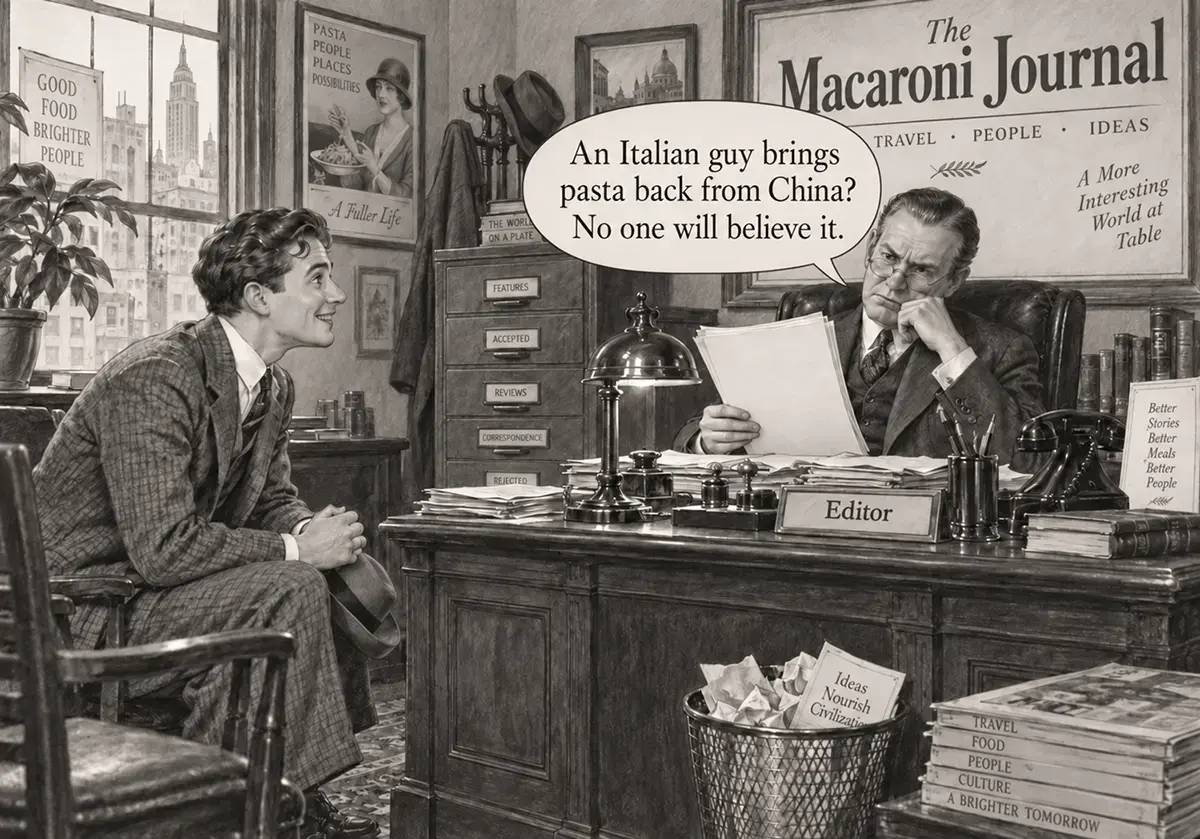
Origins of the Marco Polo Story
The story of Marco Polo bringing pasta back from China seems to have originated in, of all places, the American advertising industry. In 1929 the Macaroni Journal, a publication of the American pasta industry, published a fanciful story called “A Saga of Cathay,” that involved Marco Polo and the discovery of strands of dough in China. One character was even given a pasta-related name. This promotional fiction gradually became entrenched as real history.
Noodles in the West and East
Many pasta lovers, myself included, have noticed a fascinating discrepancy between noodles typical of the Far East (China, Japan, Korea, etc.) and those in the West. In the East, noodles are made from all sorts of things. Wheat of course but also rice flour, mung bean flour, sweet potato starch, millet, buckwheat, and more. But, the Eastern noodles are always straight and thin—what Westerners call spaghetti. In contrast, Italian and other Western noodles are always made from wheat but they come in a huge variety of shapes and sizes. Puzzle that one if you will!
Some Other Pasta-Related Myths for You!
Salt in pasta cooking water? Yes, but not for faster boiing.
Oil in the cooking water does not prevent pasta from sticking together—really!