This is a common misconception. The term sushi actually refers to the vinegared rice which is served with fish or other accompaniments.
What Exactly is Sushi?
Many people think that "sushi" is synonymous with raw fish. Not so—the term actually refers to the vinegared rice that is an essential part of sushi meals. This rice is made by dissolving sugar and maybe a touch of salt in rice vinegar and then tossing this liquid with the hot, just-cooked rice. This rice is used to make the rolls and other items that you typically order at a sushi restaurant. The term sushi therefore refers to vinegared rice (called shari or sushi-meshi) served with other ingredients. These ingredients may or may not include fish; egg and vegetables are popular, and of course many kinds of sushi include seasoned dried seaweed, or nori.
Raw fish served by itself without the rice is called sashimi. Sashimi itself is not sushi, although it is typically available at sushi restaurants.

Different Kinds of Sushi
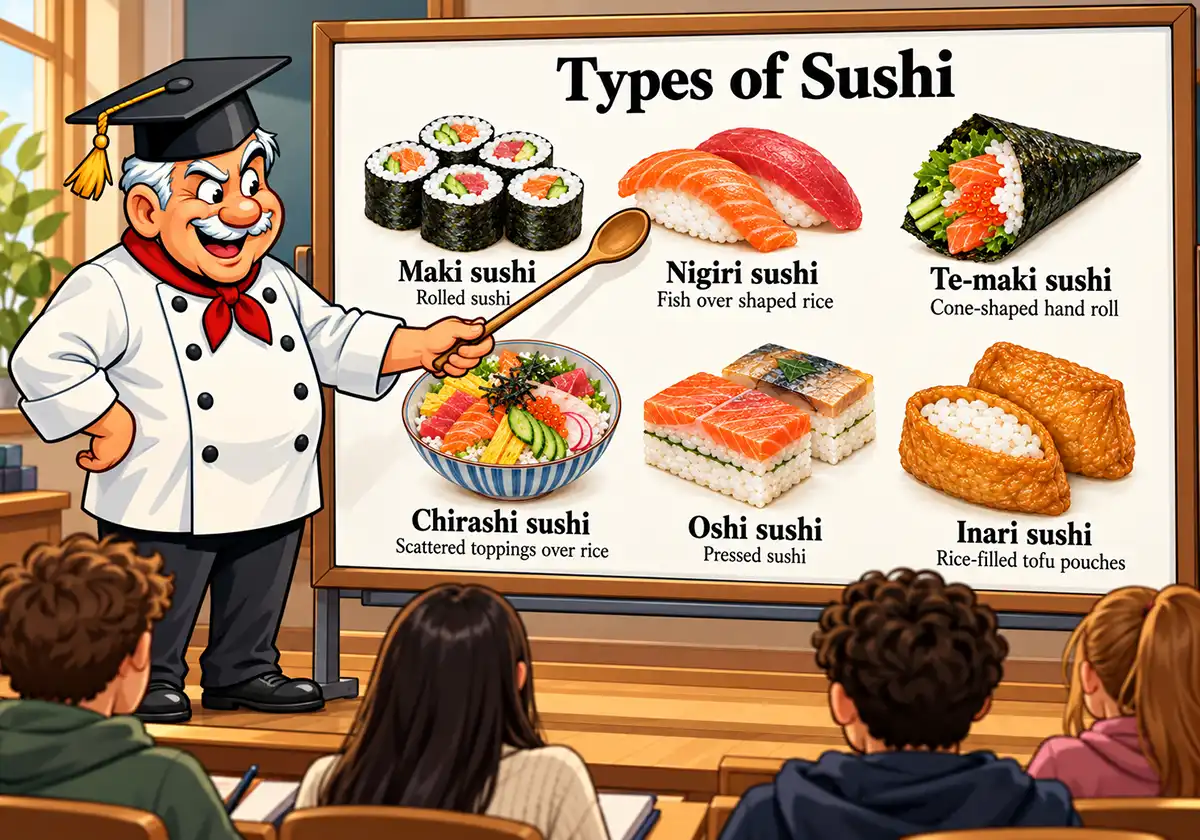
There are several kinds of sushi, or ways of serving it. Here is a quick run-down:
- Maki sushi: Rice and fillings are rolled into a cylinder inside a sheet of seaweed (nori) and then sliced into bite-size pieces.
- Nigiri sushi: Rice is hand-formed into small oval mounds and topped with sliced fish, egg, etc.
- Te-maki sushi: Hand rolled sushi provides sheets of nori, vinegared rice, and various fillings. Each diner then "hand rolls" the seaweed into a conical shape containing the rice and fillings. It is eaten sort of like an ice cream cone.
- Chirashi sushi: A bowl or box of vinegared rice scattered with a variety of toppings such as raw fish, vegetables, and egg.
- Oshi sushi: Rice and other ingredients are pressed into a mold and then cut into blocks or rectangles.
- Inari sushi: Vinegared rice stuffed into pockets of seasoned fried tofu.
The Origins of Sushi
The origins of sushi lie centuries ago as a way to preserve fish. It is believed that this occurred in mainland Southeast Asia and possibly southern China; the familiar dish of fish served with vinegared rice developed later in Japan. Salted freshwater fish was packed with cooked rice and left it to ferment. Lactic-acid fermentation created an acidic environment that helped preserve the fish, important in the days before refrigeration. The rice served as only as a preservation medium and was usually discarded when the fish was eaten. The technique reached Japan and appears in Japanese records from the Nara period, 710–794.
Eventually, Japanese makers shortened the fermentation process, eventually eating the rice along with the fish. The crucial later change was adding vinegar to cooked rice to supply sourness without waiting for time-consuming fermentation. Sushi thus evolved from a preservation method into a dish prepared for relatively immediate eating. During the Edo period, 1600–1868, vinegared rice and fish came together in forms that would be recognizable today.
We see that sushi’s preservation ancestry extends beyond Japan, while modern sushi is a Japanese culinary development. Raw fish was not its starting point; the transition from fermented rice to vinegar-seasoned rice was the defining change.
Some Other Rice-Related Myths for You!
Speaking of sushi rice ......
Is wild rice all the same? Learn the answer here.