

False! Despite some claims, MSG is perfectly safe and does not cause a "syndrome." It occurs naturally in many common foods.
What is MSG?
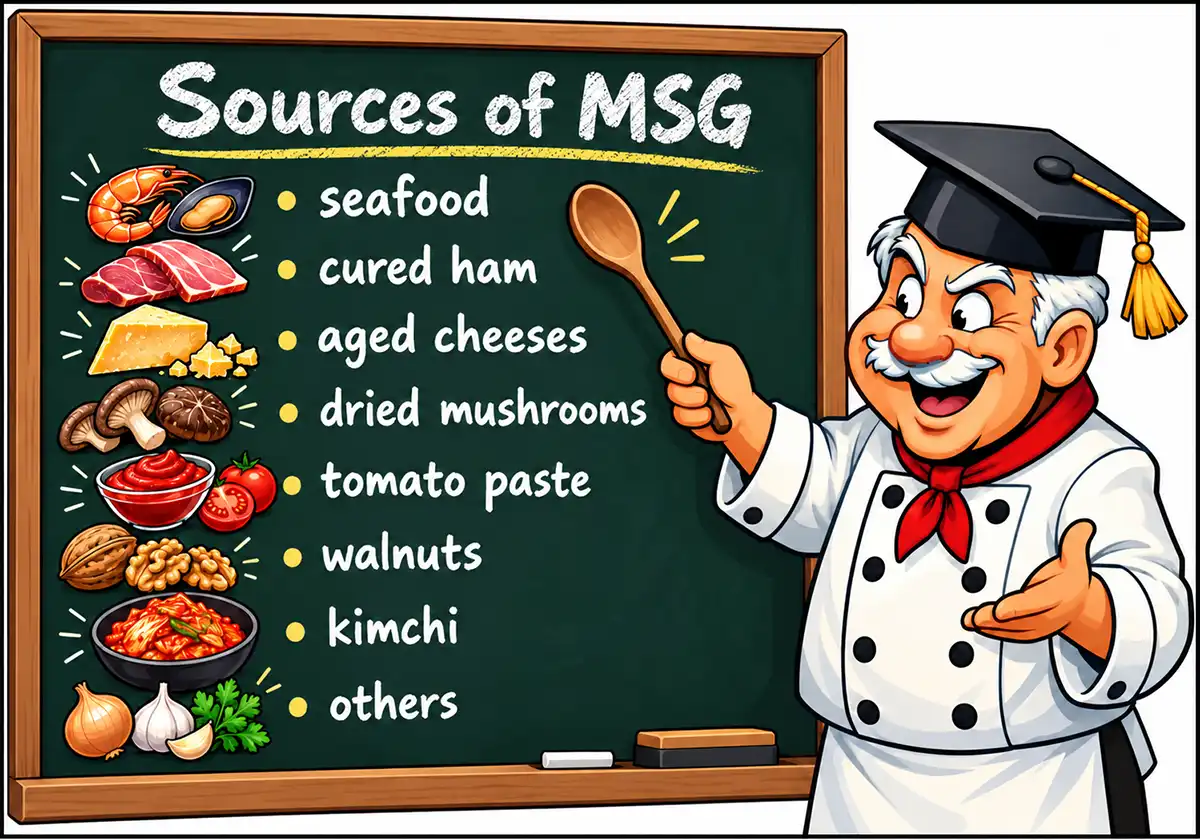
MSG, or monosodium glutamate (or simply glutamate), is an amino acid that was originally isolated from seaweed over 100 years ago. It was found to provide a flavor that was neither sweet, salty, sour, or bitter (the four traditional basic tastes). This savory taste, called umami, is not really a flavor in itself. Rather, umami as provided by glutamate, makes food taste better—it is a flavor enhancer. It rapidly gained popularity as an additive in many restaurant dishes and processed foods. It was also noted—and usually overlooked—that many foods naturally contain their own glutamate in fairly large amounts, examples include some seafood, cured ham, aged cheeses, dried mushrooms, tomato paste, walnuts, and kimchi. Yet in the early 1970s an irrational fear of MSG and of “Chinese restaurant syndrome” swept the country without any evidence. Let’s look at why this happened.
Origins of Chinese Restaurant Syndrome and the MSG Scare
The MSG panic started in 1968 when a certain Dr. Kwok, a pediatrician, published a letter in a medical journal describing symptoms he often experienced after eating at a Chinese restaurant. The symptoms he reported were numbness at the back of the neck spreading to the arms and back, weakness, and palpitations, typically beginning 15–20 minutes after eating and lasting about two hours. He did not claim a specific cause for the symptoms but suggested sodium, cooking wine, and MSG as possibilities. Some readers wrote in reporting that they also experienced symptoms after eating Chinese food. But the reported symptoms and the timing of the symptoms varied widely—there was no consistency. The journal actually wrote a tongue in cheek editorial mocking this “tempest in a teapot” about an apparently nonexistent effect.
The press got hold of the story, however, and at the time Americans were increasingly concerned about synthetic chemicals and food additives. The MSG “story” fit nicely into the narrative of “bad” food additives. The fire was further fueled by racial and social fears. Chinese food in the United States had long been framed through stereotypes of foreignness, unsanitary kitchens, strange ingredients, and supposedly weird cooking practices. That history made it easier for consumers and journalists to accept an explanation in which an unfamiliar-seeming ingredient, associated in the public imagination with Chinese restaurants, was presumed hazardous. And it was overlooked that MSG was already widely present in many processed American foods including canned soup, condiments, frozen vegetables, television dinners, breakfast cereal, and baby food—not to mention naturally present in many foods as mentioned above. Yet the health scare acquired a specifically Chinese label rather than becoming, for example, a generalized concern about additives in processed food. And it predictably expanded to generalized fears about MSG regardless of its source.
What the Science Says About MSG
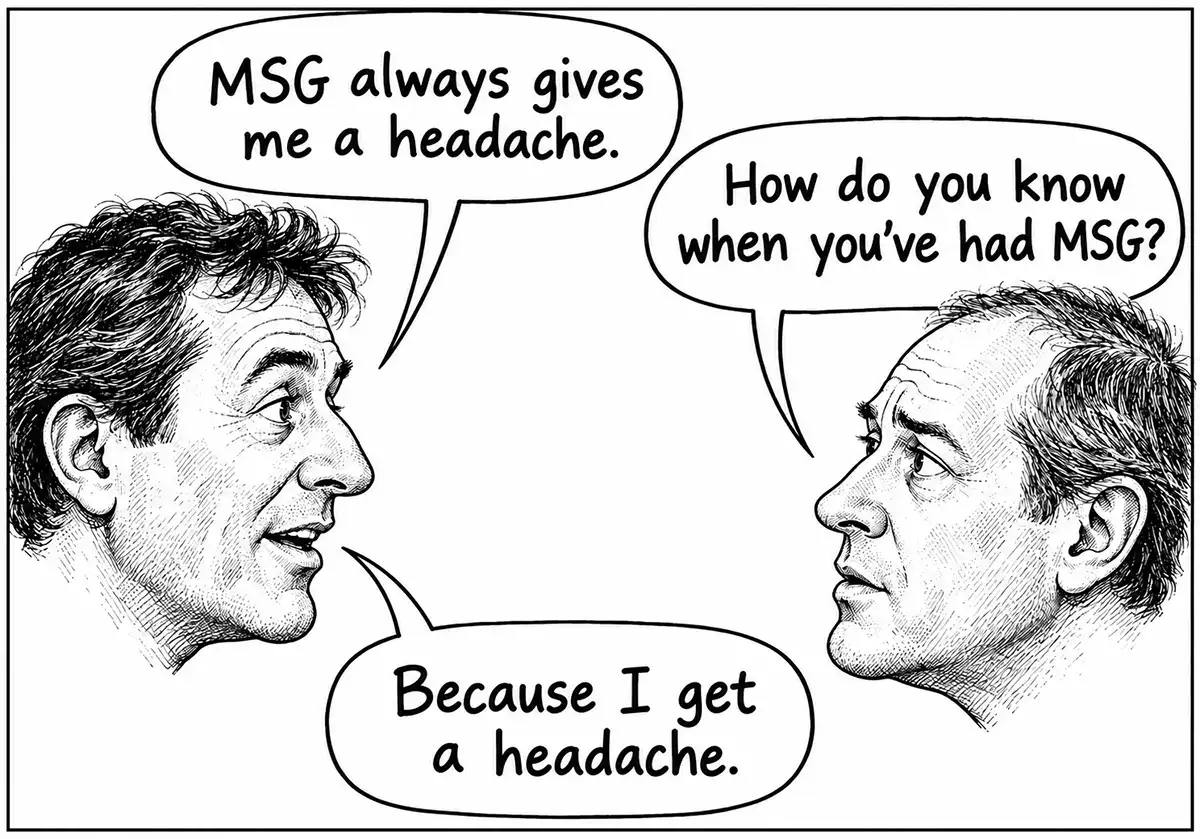
Early during the MSG scare, a number of studies were done to determine if these worries about MSG were actually founded. Some of the studies seemed to support the idea that MSG could cause unpleasant symptoms or even have more serious health effects. However, these studies were almost all seriously flawed, with major methodological errors such as not being blinded or using immense doses of MSG. Since then, more rigorous research has shown conclusively that MSG is safe to consume and does not cause a "syndrome" of headache and other unpleasant symptoms. In fact, in one carefully conducted study, people who claimed to have a strong MSG sensitivity were unable to tell if a meal they had consumed contained MSG or not.
MSG: The Bottom Line
The information presented here does not mean that people claiming to have an MSG sensitivity are lying or making things up, but it suggests that they are reacting to expectations, showing psychosomatic symptoms, or feeling poorly from other causes. A person who believes that MSG causes headaches will be quick to claim that an after-meal headache was caused by MSG in the food and to ignore other potential causes. If you think that eating food with added MSG makes you feel poorly then by all means avoid it. It would be wrong, however, to attribute serious health issues to MSG or to accept the "syndrome" as accepted fact.


Umami actually is its own “flavor” — of the five taste receptors we have, one of them is dedicated to tasting umami! I’ll just quote wikipedia: “Five basic tastes are recognized today: salty, sweet, bitter, sour, and umami.” (https://en.wikipedia.org/wiki/Taste_receptor#Function) Also see the wikipedia article on umami for a list of a couple dozen foods “that have a strong umami flavor”.
Umami “makes food taste better” in the same way that the “right” amount of salt makes food taste better (e.g. even chocolate chip cookies need salt to reach their full potential). But you wouldn’t say that salt doesn’t have a “flavor”!
Thanks for your comment! I was curious and dissolved a little MSG in water and tasted it. It has a taste for sure, not pleasant, sort of chemical-like? And thanks for the Wikipedia link. I am working on a post about taste receptors and it will be very useful.